
WELLS, H. G., 1866 to 1946
H. G. Wells
H. G. Wells (1866-1946) was an English writer, author of The Time Machine, The War of the Worlds and The Invisible Man.
- Books
- 29
- Editions tracked
- 42
- First editions
- 18
- Nationality
- United Kingdom, United Kingdom of Great Britain and Ireland
Collect H. G. Wells
H. G. Wells books in order
In publication order
- 1The Time Machine1895
- 2The Wonderful Visit1895
- 3The Island of Dr. Moreau1896
- 4The Wheels of Chance1896
- 5The Invisible Man1897
- 6The War of the Worlds1898
- 7Love and Mr. Lewisham1899
- 8Tales of Space and Time1899
- 9When the Sleeper Wakes1899
- 10The First Men in the Moon1901
- 11The Food of the Gods and How It Came to Earth1904
- 12A Modern Utopia1905
Show all 29 books in order
- 13Kipps1905
- 14In the Days of the Comet1906
- 15The War in the Air1908
- 16Ann Veronica1909
- 17Tono-Bungay1909
- 18The History of Mr. Polly1910
- 19The Country of the Blind1911
- 20The New Machiavelli1911
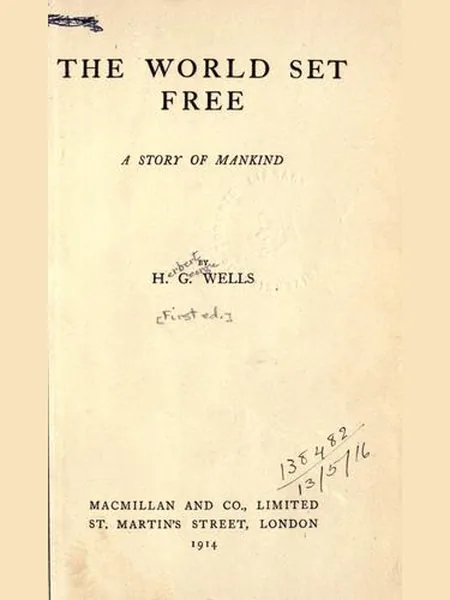
- 21The World Set Free1914
- 22The Journal of a Disappointed Man1919
- 23The Outline of History1919
- 24A Short History of the World1922
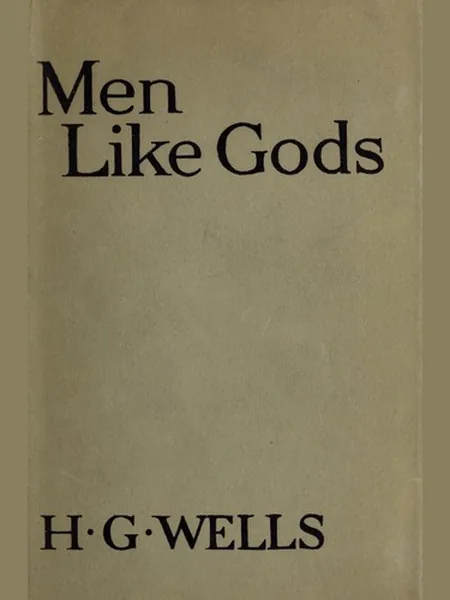
- 25Men Like Gods1923
- 26The Short Stories of H.G. Wells1927
- 27The Shape of Things to Come1933
- 28The Time Machine ; And, the Invisible Man1981
- 29Dream of Armageddon Illustrated2003
First editions, year by year
- 1896The Island of Doctor MoreauHeinemann
- 1897The Invisible ManC. Arthur Pearson
- 1898The War of the WorldsHeinemann
- 1901The First Men in the MoonGeorge Newnes Limited
- 1904The Food of the GodsMacmillan
- 1905A Modern UtopiaThomas Nelson
- 1905KippsMacmillan
- 1906In the Days of the CometMacmillan
- 1908The War in the AirG. Bell
- 1909Ann VeronicaT. Fisher Unwin
- 1911The Country of the BlindT. Nelson
- 1914The World Set FreeMacmillan
- 1919The Outline of HistoryNewnes
- 1922A Short History of the WorldCassell
- 1923Men Like GodsCassell
- 1933The Shape of Things to ComeHutchinson
- 1981Three More Novels of the FutureDoubleday
- 2003Dream of Armageddon IllustratedOutrigger Publications
Which edition do you have?






Frequently asked questions
What order should I read H. G. Wells's books in?
In publication order they begin with The Time Machine (1895), then The Wonderful Visit (1895) and The Island of Dr. Moreau (1896). Books in a series are listed in series order on this page.
What was H. G. Wells's first book?
The earliest book we list is The Time Machine, first published in 1895.
When was H. G. Wells born?
H. G. Wells was born in 1866 and died in 1946.
How many H. G. Wells books does MyVolumes track?
We track 29 books by H. G. Wells across 42 editions, 18 of them first editions.
How do I know if my H. G. Wells book is a first edition?
Open the book's page here and compare the publisher, place, date and the issue points we list for the first printing with your copy's title page and copyright page.
Where these facts come from
- H. G. Wells, Wikipedia (en.wikipedia.org)
- The Time Machine, Wikipedia (en.wikipedia.org)
- The War of the Worlds, Wikipedia (en.wikipedia.org)
- Open Library search: The Time Machine, Open Library (openlibrary.org)
Every fact on this page was checked against the sources listed. Checked 17 October 2026.