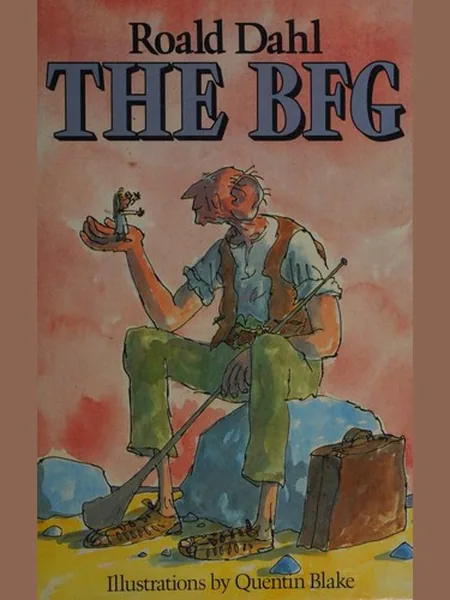
The BFG
Roald Dahl · Jonathan Cape, 1982
First edition
Check: jacket, front flap: Priced £6.50 (first issue jacket)
Free toolIdentify
Scan a book's barcode or type its ISBN to see the edition, whether it is a first edition, what to check on the copyright page to confirm the printing, and its value where we have one. It runs in your phone's browser and keeps scanning, so it suits book fairs, charity shops and your own shelves.
Log in to see which books you already own.
Roald Dahl · Jonathan Cape, 1982
First edition
Check: jacket, front flap: Priced £6.50 (first issue jacket)
Tip: add MyVolumes to your home screen to open the scanner like an app.
Turn the book over: the barcode on the back cover carries the ISBN-13, starting 978 or 979. Older books print the ISBN or SBN on the copyright page instead.
Press Scan and hold the barcode inside the frame, or type the number. Hyphens and spaces do not matter.
See the edition, whether it is a first edition, its value range where we have one, and whether it is already in your collection.
An ISBN covers every printing of an edition, so check the point shown, such as the number line, before you pay a first edition price.
An ISBN identifies an edition, not a printing. An unchanged reprint keeps the same ISBN, so the first printing and the tenth printing of an edition share one number. That is why a scan alone cannot prove a first edition, and why the scanner shows you what to check next.
| Question | From the scan | What to check yourself |
|---|---|---|
| Which edition is it? | Yes: publisher, year and binding | Nothing, if the ISBN is printed in the book |
| Is it a first edition? | Whether that edition is the first | The edition statement on the copyright page |
| Is it the first printing? | The point to check, where researched | The number line and the issue points |
| What is it worth? | A value range by condition, where recorded | The condition of the book and its jacket |
| Do I already own it? | Yes, with a free account | Nothing |
The 9-digit Standard Book Number was introduced in 1966 and became the 10-digit ISBN as international standard ISO 2108 in 1970; ISBNs have had 13 digits since 1 January 2007. Sources: ISBN, Wikipedia; What is an ISBN?, International ISBN Agency.
Yes. The scanner and ISBN lookup are free and run in your phone's browser, with nothing to download. A free account adds owned and wanted flags, so you can see at a glance which books you already have.
Scan the barcode or type the ISBN. We show each edition we hold with that ISBN, whether it is a first edition and its value range by condition where we have recorded one. Value depends on the printing and the condition, so check the copyright page and grade the book and jacket before relying on a figure.
Only part of the way. An unchanged reprint keeps the same ISBN, so the first printing and the tenth printing of an edition share one number. The ISBN finds the edition; the number line, the edition statement and the points on the copyright page tell you the printing. The scanner shows the point to check for each edition we have researched.
On the back cover above the barcode, and on the copyright page, the back of the title page. The barcode number starting 978 or 979 is the ISBN-13. Books from 1970 to 2006 also print a 10-digit ISBN, which works here too.
Type it in. The 9-digit Standard Book Number was used in Britain from 1966 until the 10-digit ISBN replaced it in the early 1970s; we add the leading 0 that turns it into an ISBN and look that up.
Most books printed before about 1970 have none. Search by title and author instead, then compare your copy with the identification guide on each edition's page.
Yes. It works in Safari and Chrome on iPhone and Android: allow camera access when asked and hold the barcode inside the frame. If the camera is unavailable, type the ISBN instead. You can add MyVolumes to your home screen so the scanner opens like an app.
Usually, yes. Book club copies share the title but are cheaper reprints, often without a price on the jacket flap and sometimes with a small blind stamp on the back board. Collectors pay far less for them than for the trade first edition.