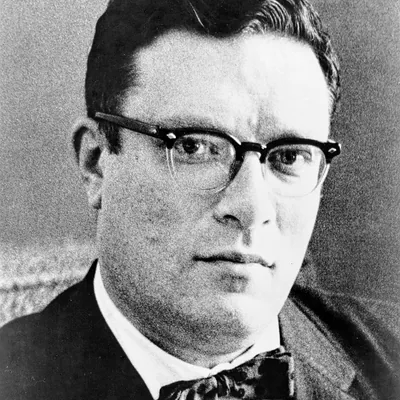
ASIMOV, ISAAC, 1920 to 1992
Isaac Asimov
Isaac Asimov (c. 1920-1992) was a Russian-born American writer and biochemist, author of I, Robot and the Foundation series.
- Books
- 126
- Editions tracked
- 231
- First editions
- 91
- Nationality
- United States, Russian Socialist Federative Soviet Republic
- Born
- Petrovichi, 1920
- Died
- Manhattan, 1992
Isaac Asimov wrote 126 books we track between 1936 and 2010; in publication order they begin with The Genetic Code (1936).
Life
About Isaac Asimov
Writer
- Known as
- biochemist, novelist, prose writer, autobiographer
- Genres
- science fiction
- Citizenship
- Russian Socialist Federative Soviet Republic, United States
- Also wrote as
- Paul French
Background
- Educated at
- Columbia University, Fu Foundation School of Engineering and Applied Science, Columbia University School of General Studies, Boys and Girls High School
Awards and honours
- Hugo Award (1963)
- James T. Grady-James H. Stack Award for Interpreting Chemistry (1965)
- Hugo Award for Best All-Time Series (1966)
- Humanist of the Year (1984)
- Edward E. Smith Memorial Award (1967)
- Nebula Award for Best Novel (1973)
- Locus Award for Best Novel (1973)
- Hugo Award for Best Novel (1973)
Notable works
- Foundation series
- Robot series
- Nightfall
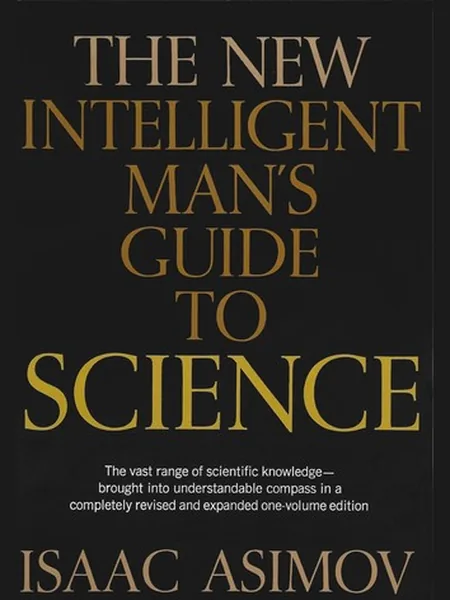
- The Intelligent Man's Guide to Science
- I, Robot
- The Bicentennial Man
- The Gods Themselves
- Youth
From Wikidata (CC0); Wikipedia has articles on Isaac Asimov in 121 languages.
For collectors
Collect Isaac Asimov
Reading guide
Isaac Asimov books in order
In publication order
- 1The Genetic Code1936
- 2Nightfall1941
- 3I, Robot1950
- 4Pebble in the Sky1950
- 5The Foundation Trilogy1950
- 6Foundation1951
- 7The Stars, Like Dust1951
- 8David Starr - Space Ranger1952
- 9Foundation and Empire1952
- 10The Currents of Space1952
- 11Lucky Starr and the Pirates of the Asteroids1953
- 12Second Foundation1953
Show all 126 books in order
- 13Lucky Starr and the Moons of Jupiter1954
- 14Lucky Starr and the Oceans of Venus1954
- 15The Caves of Steel1954
- 16The Chemicals of Life1954
- 17The Naked Sun1954
- 18The End of Eternity1955
- 19The Martian Way1955
- 20Inside the Atom1956
- 21Lucky Starr and the Big Sun of Mercury1956
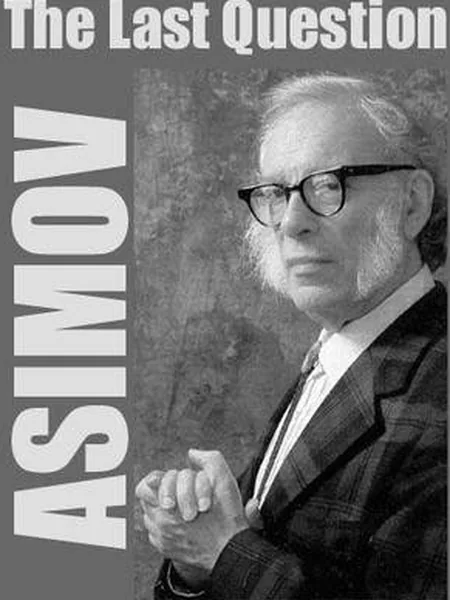
- 22The Last Question1956
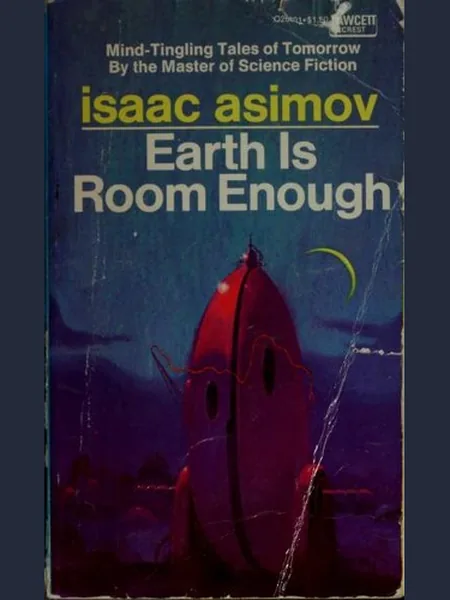
- 23Earth Is Room Enough1957
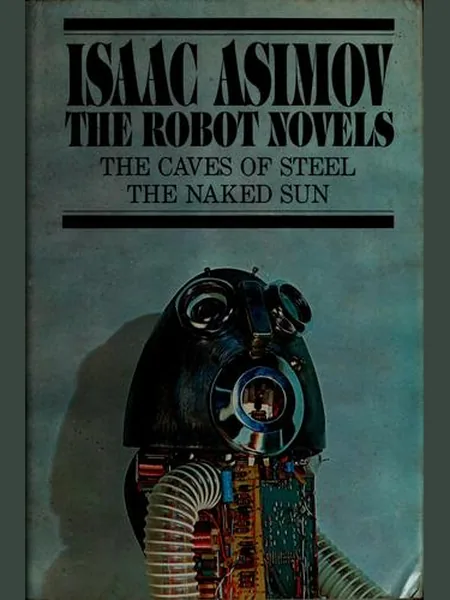
- 24The Robot Novels1957
- 25A Whiff of Death1958
- 26Lucky Starr and The Rings of Saturn1958
- 27The World of Carbon1958
- 28Nine Tomorrows1959
- 29Realm of Numbers1959
- 30The Clock We Live on1959
- 31Words of Science, and the History Behind Them1959
- 32The Intelligent Man's Guide to Science1960
- 33The Wellsprings of Life1960
- 34Realm of Algebra1961
- 35Words from the Myths1961
- 36Life and Energy1962
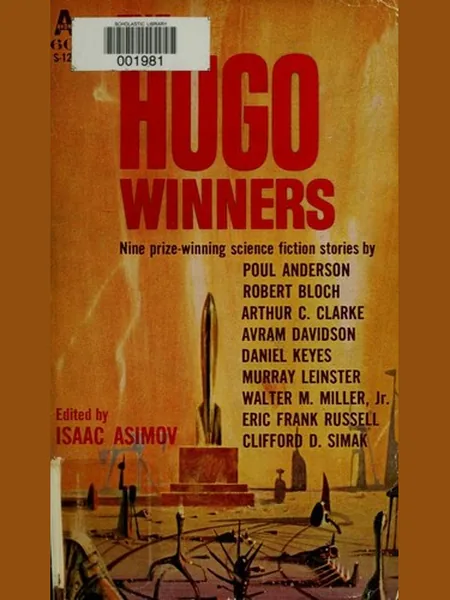
- 37The Hugo Winners1962
- 38The Human Body1963
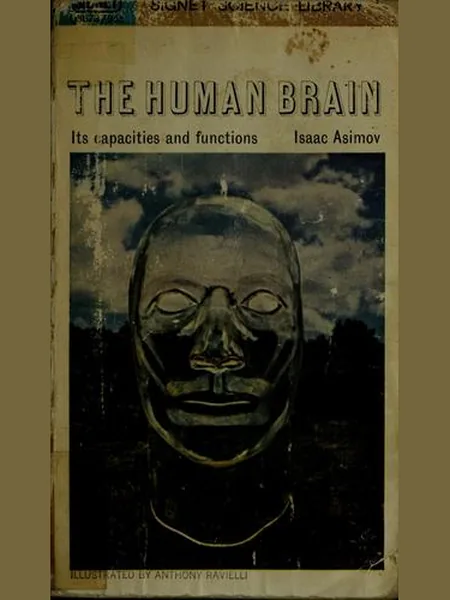
- 39The Human Brain1963
- 40Adding a Dimension1964
- 41The Rest of the Robots1964
- 42A Short History of Chemistry1965
- 43Fifty Short Science Fiction Tales1965
- 44Fantastic Voyage1966
- 45Light, Magnetism, and Electricity1966
- 46Motion, Sound, and Heat1966
- 47The Electron, Proton and Neutron1966
- 48The Neutrino1966
- 49The Universe1966
- 50Tomorrow's Children1966
- 51Understanding Physics1966
- 52Is Anyone There?1967
- 53Mars1967
- 54The Roman Empire1967
- 55Asimov's Mysteries1968
- 56Nightfall and Other Stories1969
- 57Asimov's Guide to Shakespeare1970
- 58Isaac Asimov's Treasury of Humor1971
- 59The Early Asimov ; Or, Eleven Years of Trying1972
- 60The Gods Themselves1972
- 61Nebula Award Stories Eight1973
- 62The Best of Isaac Asimov1973
- 63The Hugo Winners, Volume 2 (1962 - 1970)1973
- 64The Shaping of North America from Earliest Times to 17631973
- 65Before the Golden Age1974
- 66Tales of the Black Widowers1974
- 67The Birth of the United States, 1763-18161974
- 68Buy Jupiter, and Other Stories1975
- 69More Tales of the Black Widowers1976
- 70Murder at the ABA1976
- 71The Bicentennial Man and Other Stories1976
- 72Asimov on Numbers1977
- 73The Collapsing Universe1977
- 74100 Great Science Fiction Short Short Stories1978
- 75A Choice of Catastrophes1979
- 76Extraterrestrial Civilizations1979
- 77The Science Fictional Solar System1979
- 78Casebook of the Black Widowers1980
- 79Microcosmic Tales1980
- 80100 Malicious Little Mysteries1981
- 81Asimov on Science Fiction1981
- 82Asimov's Guide to the Bible1981
- 83Foundation's Edge1982
- 84Laughing Space1982
- 85The Complete Robot1982
- 86Computer Crimes and Capers1983
- 87The Robots of Dawn1983
- 88The Union Club Mysteries1983
- 89The Winds of Change and Other Stories1983
- 90Banquets of the Black Widowers1984
- 91Machines That Think1984
- 92Sherlock Holmes Through Time and Space1984
- 93Supermen1984
- 94Robots and Empire1985
- 95The Edge of Tomorrow1985
- 96Young Monsters1985
- 97Foundation and Earth1986
- 98Robot Dreams1986
- 99The Best Mysteries of Isaac Asimov1986
- 100The Best Science Fiction of Isaac Asimov1986
- 101Fantastic Voyage II1987
- 102Hound Dunnit1987
- 103Azazel1988
- 104Isaac Asimov Presents the Best Crime Stories of the 19th Century1988
- 105Monsters1988
- 106Prelude to Foundation1988
- 107The Mammoth Book of Classic Science Fiction1988
- 108The Mammoth Book of Vintage Science Fiction1988
- 109Isaac Asimov Presents Tales of the Occult1989
- 110Nemesis1989
- 111Robbie1989
- 112The Asimov Chronicles1989
- 113The Mammoth Book of Golden Age Science Fiction1989
- 114Puzzles of the Black Widowers1990
- 115Robot Visions1990
- 116Asimov's Chronology of the World1991
- 117Atom1991
- 118The Ugly Little Boy1991
- 119The Complete Stories, Volume 21992
- 120The Positronic Man1992
- 121Forward the Foundation1993
- 122The Complete Stories, Volume 11993
- 123I. Asimov1994
- 124Gold1995
- 125Magic1996
- 126Youth2010
By series
Robot series 13 books
- I, Robot 1950
- Earth Is Room Enough 1957
- The Bicentennial Man and Other Stories 1976
- Robots and Empire 1985
- The Caves of Steel 1954
- The Naked Sun 1954
Foundation series 6 books
- Prelude to Foundation 1988
- Forward the Foundation 1993
- Foundation 1951
- Foundation and Empire 1952
- Foundation's Edge 1982
- Foundation and Earth 1986
Lucky Starr series 6 books
Black Widowers 5 books
In order
First editions, year by year
- 1936The Genetic CodeOrion Publishing Group
- 1950The Foundation TrilogyDoubleday
- 1950Pebble in the SkyDoubleday
- 1951FoundationDoubleday Bantam
- 1951The Stars, Like DustDoubleday
- 1952Foundation and EmpireGnome Press
- 1952The Currents of SpaceDoubleday
- 1952David Starr - Space RangerDoubleday
- 1953Second FoundationDoubleday
- 1953Lucky Starr and the Pirates of the AsteroidsDoubleday
- 1954The Caves of SteelDoubleday
- 1954The Naked SunBallantine Books
- 1954The Chemicals of LifeNew American Library
- 1955The End of EternityDoubleday
- 1955The Martian WayDoubleday
- 1956Lucky Starr and the Big Sun of MercuryDoubleday
- 1956Inside the AtomAbelard-Schuman
- 1957Earth Is Room EnoughDoubleday
- 1957The Robot NovelsDoubleday
- 1958Lucky Starr and The Rings of SaturnDoubleday
- 1958The World of CarbonAbelard-Schuman
- 1958Death DealersAvon Publications
- 1959Nine TomorrowsDoubleday
- 1959Words of Science, and the History Behind ThemHoughton Mifflin
- 1959Realm of NumbersHoughton Mifflin
- 1959The Clock We Live onAbelard-Schuman
- 1960The Intelligent Man's Guide to ScienceBasic Books
- 1961Words from the MythsHoughton Mifflin
- 1961Realm of AlgebraHoughton Mifflin
- 1962The Hugo WinnersAvon Books
- 1962Life and EnergyDoubleday
- 1963The Human BrainNew American Library
- 1964The Rest of the RobotsDoubleday
- 1964Adding a DimensionDoubleday
- 1965A Short History of ChemistryAnchor Books
- 1965Fifty Short Science Fiction TalesCollier Books
- 1966Understanding Physics: Volume IIIGeorge Allen & Unwin
- 1966The Universe; from Flat Earth to QuasarWalker Books
- 1966Motion, Sound, and HeatGeorge Allen & Unwin
- 1966Tomorrow's ChildrenDoubleday
And 51 more in the full list below.
Books and editions
Which edition do you have?






Frequently asked questions
What order should I read Isaac Asimov's books in?
In publication order they begin with The Genetic Code (1936), then Nightfall (1941) and I, Robot (1950). Books in a series are listed in series order on this page.
What was Isaac Asimov's first book?
The earliest book we list is The Genetic Code, first published in 1936.
When was Isaac Asimov born?
Isaac Asimov was born in 1920 and died in 1992.
How many Isaac Asimov books does MyVolumes track?
We track 126 books by Isaac Asimov across 231 editions, 91 of them first editions.
What awards has Isaac Asimov won?
Isaac Asimov has won Hugo Award (1963), James T. Grady-James H. Stack Award for Interpreting Chemistry (1965), Hugo Award for Best All-Time Series (1966), Humanist of the Year (1984), according to Wikidata.
Did Isaac Asimov write under another name?
Yes: Isaac Asimov also published as Paul French. Those books are listed here under the one author.
Where these facts come from
- Isaac Asimov, Wikipedia (en.wikipedia.org)
- I, Robot, Wikipedia (en.wikipedia.org)
- Foundation (Asimov novel), Wikipedia (en.wikipedia.org)
Every fact on this page was checked against the sources listed. Checked 17 October 2026. Reviewed by Harriet Ellis; read how we check facts.