- Farrar, Straus and Giroux first editions carry a statement such as "First published" or "First edition" on the copyright page, often with the year.
Publisher · founded 1946 · New York City
Farrar, Straus and Giroux
Farrar, Straus and Giroux is a New York literary publisher founded in 1945, publisher of Nobel laureates and of books such as Holes, now part of Macmillan.
- Editions tracked
- 319
- First editions
- 192
- Books
- 317
- Years
- 1954 to 2024
About Farrar, Straus and Giroux
Farrar, Straus and Giroux (FSG) is a New York literary publisher founded in 1945 by Roger W. Straus Jr. and John C. Farrar, now a division of Macmillan owned by Holtzbrinck.
It began as Farrar, Straus and Company, and its first book collected articles from Yank, the Army Weekly. The firm became Farrar, Straus and Young in 1950 and, after merging with Pellegrini & Cudahy in 1953, Farrar, Straus and Cudahy. Robert Giroux joined as editor-in-chief in 1955 after leaving Harcourt, Brace, bringing writers such as T. S. Eliot, Robert Lowell, Flannery O'Connor and Bernard Malamud. He became a partner and the firm took its present name in 1964. Straus sold a majority stake to the Georg von Holtzbrinck Publishing Group in 1993.
Its authors have won many major prizes, and Wikipedia's list of Nobel laureates in literature linked to the house includes Hermann Hesse, Aleksandr Solzhenitsyn, Isaac Bashevis Singer, Seamus Heaney, Derek Walcott and Louise Glück. Its books include Tom Wolfe's The Bonfire of the Vanities (1987) and Louis Sachar's Holes (1998), which won the National Book Award for Young People's Literature and the 1999 Newbery Medal. Current imprints include FSG Originals, Hill and Wang and North Point Press.
Holding a copy? The first edition checker shows Farrar, Straus and Giroux's practice for the year on your title page.
Identification
How to identify Farrar, Straus and Giroux first editions
- The firm's name changed several times, so the imprint on the title page helps date a copy: Farrar, Straus from 1946, Farrar, Straus & Young from 1950, Farrar, Straus & Cudahy after the 1953 merger with Pellegrini & Cudahy, briefly Farrar, Straus and Company (1963 to 1964), then Farrar, Straus and Giroux from 1964.
- From 1946 to the mid 1960s, a first printing is marked on the copyright page either by the firm's logo (the stylised FS initials) or by a printed statement such as "First printing", often with the year.
- From the mid 1960s under the Farrar, Straus and Giroux name, first printings carry a copyright-page statement such as "First edition" or "First printing", usually with the year.
- Book club copies (a general tell for US trade houses; no mark specific to this house was found): a jacket flap with no printed price is the commonest sign, though a printed price does not on its own rule out a club copy. Also look for a small blind stamp, such as a dot or square, pressed into the rear board, and for a book that is smaller and more cheaply made than the trade edition.
Authors
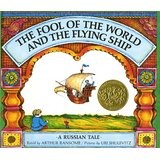
Books
Published by Farrar, Straus and Giroux






Frequently asked questions
How do I identify a Farrar, Straus and Giroux first edition?
- Farrar, Straus and Giroux first editions carry a statement such as "First published" or "First edition" on the copyright page, often with the year.
How many Farrar, Straus and Giroux books does MyVolumes track?
We track 319 editions published by Farrar, Straus and Giroux, 192 of them first editions, across 317 books.
Where these facts come from
- Robert Giroux, Wikipedia (en.wikipedia.org)
- Holes (novel), Wikipedia (en.wikipedia.org)
- First Edition Identification by Publisher A-G, Quill & Brush (qbbooks.com)
- First-Edition - Identification by Publisher (Allen and Patricia Ahearn), ILAB, 2010 (ilab.org)
- First Edition Information by Publisher, Evening Land Books (eveninglandbooks.com)
- Identifying First Editions, A Primer: The Publishers, IOBA (ioba.org)
- Farrar, Straus and Giroux, Wikipedia (en.wikipedia.org)
- Identifying Book Club Editions, IOBA (ioba.org)
- Identifying Book Club Editions, bookfever.com (bookfever.com)
Every fact on this page was checked against the sources listed. Checked 17 October 2026. Reviewed by Harriet Ellis; read how we check facts.