- Up to the early 1950s Simon & Schuster put no first-edition statement in its books: a first printing has a clean copyright page, while later printings are noted there.
- Where a printing line appears on the copyright page, the lowest number shows the printing, whatever order the numbers run in; a line with a 1 normally indicates a first printing.
- Book club editions are a common trap: their jackets usually carry no price on the front flap, so a priced jacket is one of the first things to check.

Publisher · founded 1924 · New York City
Simon & Schuster
Simon & Schuster is a New York trade publisher founded in 1924, the first publisher of Joseph Heller's Catch-22, and owned by KKR since 2023.
- Editions tracked
- 848
- First editions
- 495
- Books
- 810
- Years
- 1926 to 2025
About Simon & Schuster
Simon & Schuster is an American trade publisher founded in New York City on 2 January 1924 by Richard L. Simon and M. Lincoln Schuster, and one of the "Big Five" English-language publishers.
The partners started with a crossword puzzle book. In 1939 they backed Robert de Graff in launching Pocket Books, which introduced mass-market pocket paperbacks to the United States. Marshall Field III bought the firm in 1944, and after his death in 1957 it was sold back for one million dollars. Gulf+Western acquired it in 1975, after which it passed through Paramount Communications, Viacom, CBS Corporation and Paramount Global. Kohlberg Kravis Roberts bought it for 1.62 billion dollars in a deal that closed in October 2023, and in March 2026 it named Greg Greeley as chief executive.
Simon & Schuster first published Joseph Heller's Catch-22 on 10 October 1961, at 5.95 dollars in hardback, and Larry McMurtry's Lonesome Dove in 1985, which won the 1986 Pulitzer Prize for Fiction. Its imprints include Scribner, Atria, Gallery, Pocket Books and Simon & Schuster Books for Young Readers, and it is based at 1230 Avenue of the Americas in Manhattan.
Identification
How to identify Simon & Schuster first editions
Simon & Schuster has always marked its reprints rather than relying on a first edition statement, so a copy whose copyright page shows no later printing, or whose number line includes 1, is normally a first printing.
By period
- From 1924 to the early 1950s Simon & Schuster put no first edition statement in its books: a first printing has a plain copyright page, while later printings are noted there, often with the printing number and date.
- From about 1952 many first printings say "First Edition" or "First Printing", but not every title does. The safest test is the negative one: if nothing on the copyright page says the copy is a later printing, it is almost certainly the first.
- From the early 1970s the firm used a number line on the copyright page, occasionally alongside a "First Printing" statement.
- The lowest number in the line shows the printing, whatever order the numbers run in (for example "1 3 5 7 9 10 8 6 4 2"); a line with a 1 indicates a first printing.
Traps
- Book club copies. Book-of-the-Month Club copies are usually the same size and quality as the trade edition, so size is no guide. Their jackets usually carry no price on the front flap, so a priced jacket is one of the first things to check, and many have a small blind stamp (a dot, circle or square) low on the rear board; BOMC printed prices on some jackets in the 1970s, but those copies still carry the stamp. The copyright page may still read like a trade copy.
Example
- Catch-22 (1961): the first printing states "First Printing" on the copyright page, is bound in blue cloth with the top edges stained red, and has a jacket priced $5.95 on the front flap with Joseph Heller's photograph on the back panel.
Authors
Books
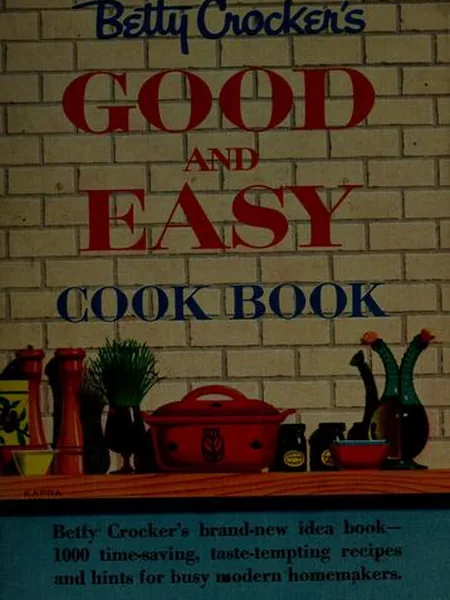
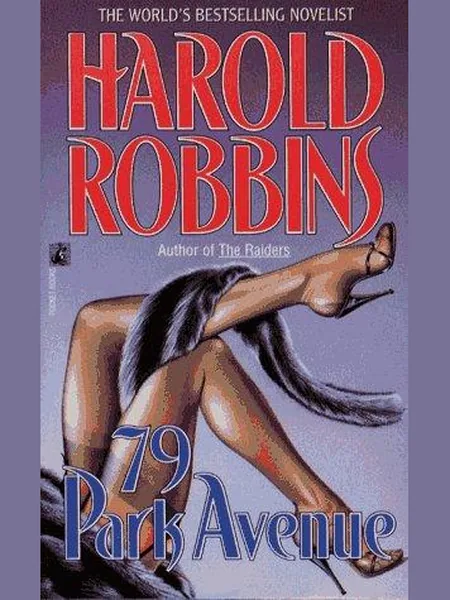
Published by Simon & Schuster









Frequently asked questions
How do I identify a Simon & Schuster first edition?
- Up to the early 1950s Simon & Schuster put no first-edition statement in its books: a first printing has a clean copyright page, while later printings are noted there. - Where a printing line appears on the copyright page, the lowest number shows the printing, whatever order the numbers run in; a line with a 1 normally indicates a first printing. - Book club editions are a common trap: their jac
How many Simon & Schuster books does MyVolumes track?
We track 848 editions published by Simon & Schuster, 495 of them first editions, across 810 books.
Where these facts come from
- Simon & Schuster, Wikipedia (en.wikipedia.org)
- Books published by Simon & Schuster UK, London (Ryde Bookshop, Alexander's Books, booksonlinebrighton), AbeBooks, 2026 (abebooks.com)
- Skandar and the Unicorn Thief, Simon & Schuster UK signed copies (MostlySignedBooks, Books for Collectors), AbeBooks search results, 2026 (abebooks.co.uk)
- First-Edition: Identification by Publisher (Allen and Patricia Ahearn), ILAB, 2010 (ilab.org)
- First Editions of Today and How to Tell Them (3rd edn), H. S. Boutell, Internet Archive, 1949 (archive.org)
- How to Identify Simon & Schuster First Editions, ILAB (ilab.org)
- Identifying First Editions, A Primer: The Publishers, Independent Online Booksellers Association (ioba.org)
- Printer's key, Wikipedia (en.wikipedia.org)
- How To Identify Book Club Editions (part 2), BookThink, 2008 (bookthink.com)
- Book Club Edition Identification, TomFolio (tomfolio.com)
- Heller, Joseph. Catch-22, first edition (lot description), Leland Little Auctions, 2020 (lelandlittle.com)
- Catch-22 (Simon & Schuster, 1961) first printing listings, Magnum Opus Rare Books, Honey & Wax Booksellers and Type Punch Matrix, AbeBooks, 2026 (abebooks.co.uk)
Every fact on this page was checked against the sources listed. Checked 20 October 2026. Reviewed by Harriet Ellis; read how we check facts.