Book collecting for beginners comes down to three habits: choose a focus you genuinely enjoy, learn the small set of terms that decide what a copy is worth, and buy the best example you can afford from someone who describes it honestly. Do those three things and you will avoid most of the expensive mistakes new collectors make. This guide walks through each step, then points you to the deeper guides and free tools on MyVolumes.
Start with what you love, then narrow it
The best collections have a shape. Shapero Rare Books suggests building around a theme, an author, a historical event or a region, and starting narrow because you can always widen later. Alexander Akin, writing for AbeBooks as President of the Antiquarian Booksellers' Association of America (ABAA), makes a similar point: nobody can reliably predict what will rise in value, so collect what means something to you.
Common starting points:
- An author. Every first printing of one writer's novels, or just their early books before they became famous.
- A series. Numbered sets are satisfying because you can see the gaps. Our series pages list each title by number.
- A publisher or imprint. Early Penguins, Ladybirds or a particular small press.
- A theme. Mountaineering, railways, cookery, your home town.
- Special editions. Fine press, signed limited and illustrated issues.
A clear focus also tells you what to ignore at a fair or in a bookshop, which saves money.
The words you need first
You do not need a full bibliographer's vocabulary to start, but these terms come up in almost every listing. Our glossary covers the rest.
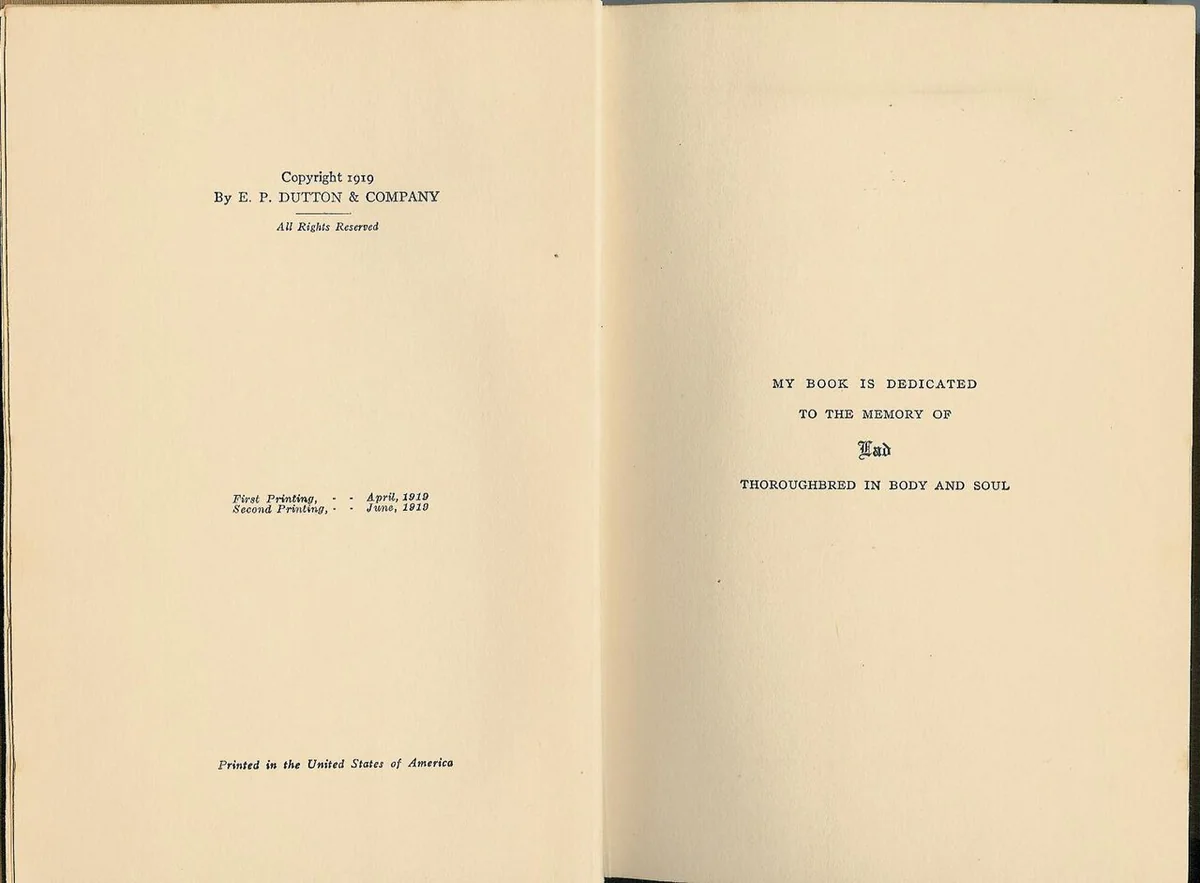

- First edition. The IOBA defines it as copies printed from the original setting of type. In modern collecting the term usually means only the very first print run. Our guide to first edition vs first printing explains why that matters.
- First printing (first impression). The first batch off the press. Many modern books show this with a number line on the copyright page: the lowest number shown usually gives the printing, so a line ending in 1 points to a first printing. Formats vary between publishers, so read our number lines explained before relying on one.
- Dust jacket. The paper wrapper on a hardback. For many twentieth century books the jacket carries a large share of the value, so a book without one is a very different object.
- Condition grades. The trade scale runs from Fine down to Poor, with the book and jacket graded separately.
- Points of issue. The IOBA describes points as peculiarities whose presence or absence helps fix the edition, issue or state of a copy. A well known example from Sotheby's: true first printings of Harry Potter and the Philosopher's Stone (1997) list "1 wand" twice in Harry's school supply list. Our points of issue guide shows how to use them.
- Signed vs inscribed. A signed copy carries the author's signature alone. An inscribed copy has a handwritten dedication as well, such as "To Elizabeth". A bookseller's guide from Books Tell You Why notes that an inscription to someone with no link to the author often adds little, while an inscription to someone close to the author (an association copy) can add a lot. See signed and inscribed books.
How to judge condition
Condition is where beginners most often overpay. The IOBA's definitions are the clearest starting point:
- Fine: no faults or defects.
- Near Fine: close to Fine, with a couple of very minor defects that must be noted.
- Very Good: shows some wear, with any defects noted.
- Good: an average used copy, complete and intact.
- Fair: worn, with all text pages present, though endpapers or the half title may be missing.
- Poor: so worn its only merit is a complete, legible text.
Grades are written as a pair, book first and jacket second, so "VG/G" means a Very Good book in a Good jacket. The IOBA also treats bookplates, owners' names and remainder marks as faults that should be mentioned.
When you handle a copy, check the spine ends and corners, look along the top edge for fading, open it gently to test the hinges, and check the jacket flap to see whether the price has been cut off (a price-clipped jacket). Our book condition grading guide explains each grade in more detail.
Akin's article gives a useful sense of scale: an ex-library copy of a title might sell for around 10 dollars while a crisp copy in its jacket fetches hundreds. That is why the standard advice is to buy the nicest copy you can afford.
Setting a budget and buying well
Decide in advance what you will spend in a month or a year, and what you would pay for the one book you most want. Then use each place to buy for what it does best.
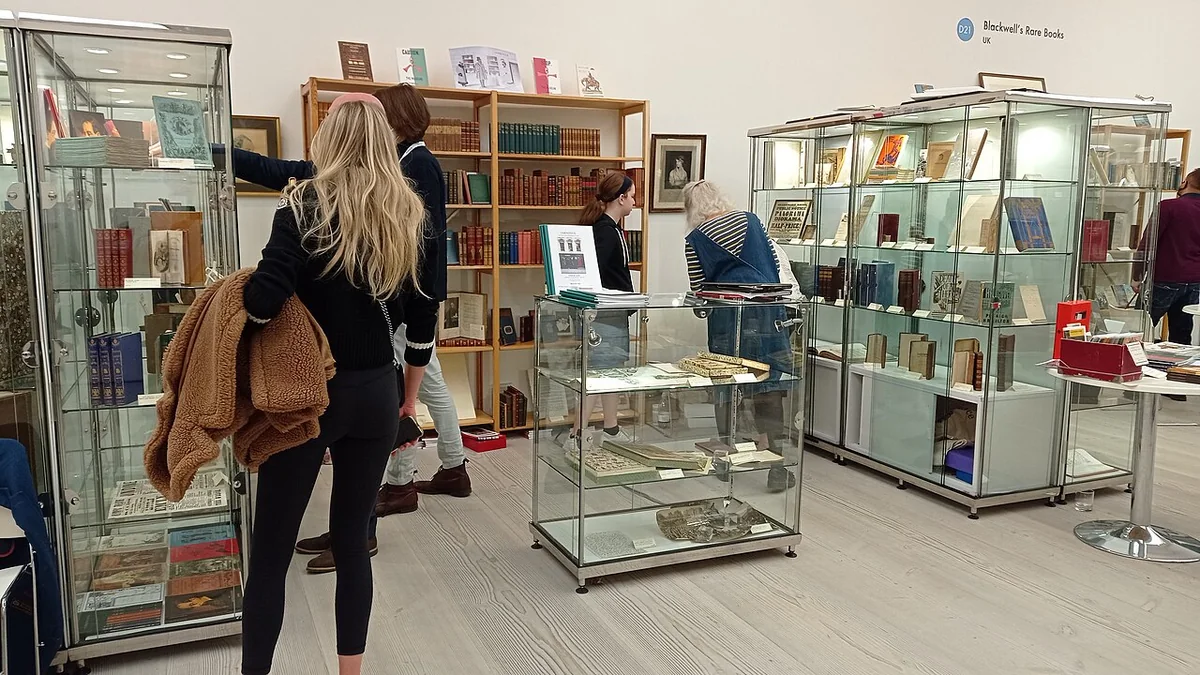

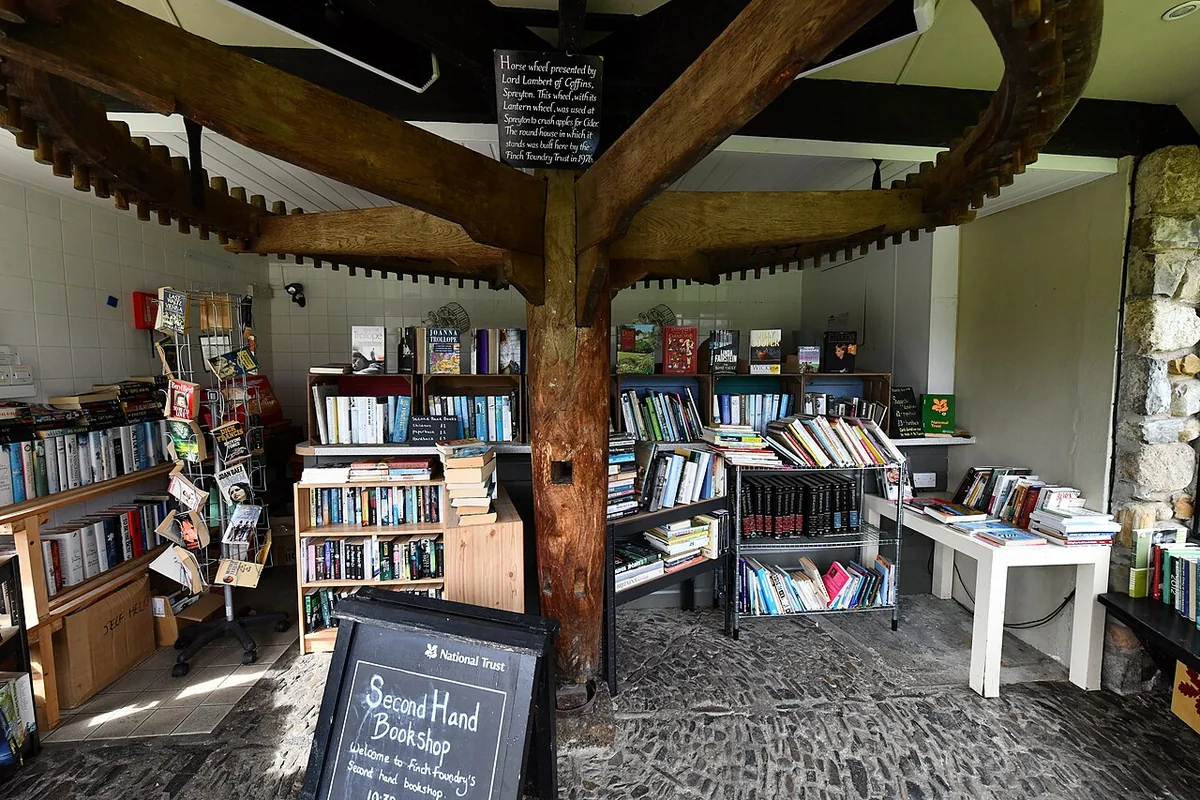

- Bookshops. A good dealer will usually explain why a book is priced as it is if you ask. Members of the UK's Antiquarian Booksellers' Association pledge to guarantee authenticity, describe items accurately and disclose significant restoration and repair.
- Book fairs. Seeing many copies side by side is the fastest way to train your eye, a point Akin also makes. The Provincial Booksellers' Fairs Association, founded in 1974 after the first York Book Fair, runs fairs across the country, and its code of practice says a book that is defective or not as described should be taken back and refunded if raised within a reasonable time.
- Auctions. Useful for scarcer books, but remember that the hammer price usually has a buyer's commission added on top. Read the lot description closely and ask for extra photographs.
- Online. The widest choice and the widest range of seller knowledge. Check the copyright page photograph yourself, and buy from sellers with a clear returns policy.
Whatever the channel, ask about returns before you pay. A seller who will not take back a book that turns out to be misdescribed is telling you something.
Traps that catch beginners
Most bad purchases fall into four groups. Learn these and you will spot them quickly.
- Book club editions. The IOBA lists the usual signs on American copies: no price on the jacket, a small blind stamp on the lower back board, a code printed near the gutter, cheaper paper and often a slightly smaller size, though Book of the Month Club copies are usually the same size as the trade edition. In the UK, Book Club Associates copies often show "BCA" on the jacket or case spine and a book club statement on the copyright page, as one long running collector's blog documents. Use our book club edition checker and read book club editions explained.
- Facsimile jackets. Reproduction jackets are sold legitimately as replacements, but some get passed off as originals. Dan Gregory's article for ILAB describes modern copies being distressed and restored to look old, and suggests checking the print pattern under magnification and looking for paper that glows under ultraviolet light. Since 2003 ABAA fair rules have required facsimiles to be disclosed. See our facsimile dust jackets guide.
- Ex-library copies. Stamps, pockets and spine labels cut value sharply, and the IOBA says ex-library status must always be stated.
- Later printings sold as firsts. A copyright page saying "First published in 1953" does not make a copy a first printing if a later impression is listed below it or the number line has lost its 1. Learn how to identify a first edition for your chosen author before spending much.
Looking after your books
Good care protects what you paid. Shapero's advice for collectors includes:
- Keep books out of direct sunlight, which fades cloth, leather and jackets.
- Aim for a stable environment, because heat and damp encourage mould and insects.
- Shelve books upright with similar sizes together, not packed tightly, and away from pipes.
- Protect jackets with acid-free covers.
- Take out newspaper cuttings and other acidic inserts, which darken the pages.
- Leave repairs to valuable books to a skilled restorer or bookbinder.
Our guide to caring for collectable books goes further.
Keeping records
Start a record with your first purchase, not your fiftieth. For each book note the title, author, publisher, year, printing, condition of book and jacket, where you bought it, what you paid and any points you checked. Keep the receipt or listing. Records help with insurance, make resale easier and stop you buying the same book twice.
MyVolumes was built for this. Our free book collection app lets you add a copy against the exact edition and printing, grade the book and jacket separately on the trade scale, and see an estimated value range where we have sale evidence. If you already track your books in Goodreads, The StoryGraph or LibraryThing, you can import your library rather than starting again. You can also add titles to a wantlist so the gaps in a series are clear when you go to a fair.
Check your copy
Before you buy, or when a new book arrives, run through these steps:
- Open the copyright page and note the publisher, every date listed and the number line, if there is one.
- Compare it with the points of issue for that title on its MyVolumes edition page.
- Grade the book and jacket separately, and note any price clipping, stamps or inscriptions.
- Check for book club signs and for a jacket that looks too fresh for the book.
- Use Is my book valuable? for a quick answer on whether your copy is worth a closer look.
- Or scan the barcode or ISBN with your phone to find the edition and record your copy.
Frequently asked questions
How do I start a book collection?
Pick a focus you enjoy, such as one author, a series or a publisher, and learn how first printings and condition grades work for it. Then buy the best copy you can afford from a seller who describes books accurately and accepts returns, and record each book as you buy it.
What is the difference between a first edition and a first printing?
Strictly, a first edition is every copy printed from the original setting of type, which can run to several printings. Collectors of modern books usually mean only the first printing, and that is the copy that carries the premium.
Is a signed book worth more than an inscribed one?
Usually, a plain signature or an inscription to someone close to the author adds the most. An inscription to an unknown private person often adds little, because the book is personalised to a stranger.
Are book club editions worth collecting?
Rarely for value. Book club editions are usually cheaper copies made for club members, and trade bodies such as the IOBA expect sellers to state when a copy is one, regardless of condition.
How much money do I need to start collecting books?
Very little. Many collections start with modestly priced books, and the common advice is to buy fewer, better copies rather than many poor ones, because condition drives value.
Where these facts come from
- A beginner's guide to book collecting, Alexander Akin (President, ABAA), AbeBooks (abebooks.com)
- Rare Book Collecting: A Beginner's Guide, Shapero Rare Books (shapero.com)
- Condition Definitions, Independent Online Booksellers Association (IOBA) (ioba.org)
- First edition (glossary), IOBA (ioba.org)
- Points (glossary), IOBA (ioba.org)
- Inscribed (glossary), IOBA (ioba.org)
- Identifying Book Club Editions, IOBA, 2016 (ioba.org)
- Harry Maxim versus book clubs, Existential Ennui, 2010 (existentialennui.com)
- Printer's key, Wikipedia (en.wikipedia.org)
- A Guide to Identifying Harry Potter First Editions, Sotheby's, 2026 (sothebys.com)
- How a Signature Increases a Book's Value, Books Tell You Why, 2019 (blog.bookstellyouwhy.com)
- The Finer Print: Growing Concern Over Facsimile Jackets, Dan Gregory, ILAB (first published in the ABAA Newsletter, 2005) (ilab.org)
- The ABA Code, Antiquarian Booksellers' Association (aba.org.uk)
- About the PBFA, Provincial Booksellers' Fairs Association (pbfa.org)
- Caring for antique books, Shapero Rare Books (shapero.com)
Points of issue are listed only where at least two independent sources agree. Last reviewed 18 October 2026.
Last reviewed 18 October 2026.