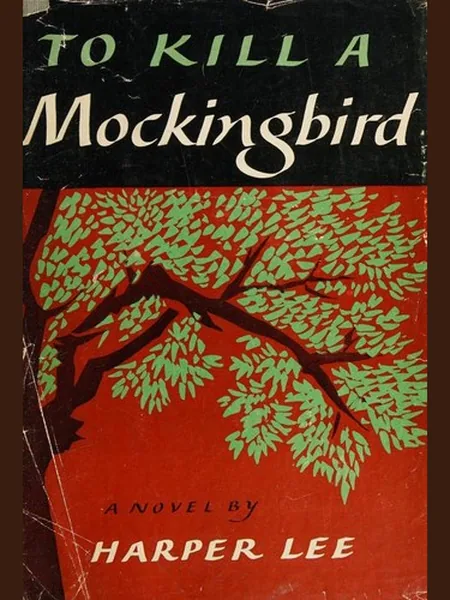
The first edition of To Kill a Mockingbird is the hardback published by J. B. Lippincott of Philadelphia and New York in July 1960. It is the only edition most collectors mean when they say "first", and it is one of the most often misidentified books in American collecting, because the novel was reprinted so many times in its first year and the book club copies look almost the same.
About 5,000 copies were printed for the July publication, a figure given by the PPrize guide to Pulitzer Prize firsts, by RR Auction and by dealers such as First and Fine. Harper Lee's novel then became a bestseller, won the Pulitzer Prize for Fiction in 1961 and was filmed in 1962, and the presses kept running. The result is a market in which genuine first printings in their first jacket are scarce, while later printings, book club copies and books wearing the wrong jacket turn up everywhere.
If you have a copy in front of you, the checks below take a minute.
The one-minute check
Work through these in order. A true first printing passes all four.
- The copyright page. It reads "First Edition". This is the statement collectors look for first, according to both PPrize and Raptis Rare Books.
- The binding. Brown boards with a green cloth spine, lettered in brown. RR Auction's description of the first printing it sold in 2024 matches PPrize's.
- The jacket price. $3.95, printed at the lower corner of the front flap, with no printing statement beneath it. Later jackets record the printing at the foot of the front flap, which is the quickest way to spot one.
- The front flap blurb. A paragraph by Truman Capote printed in green at the top of the front flap.
If the copyright page says First Edition and the jacket is a later printing, you have a first printing of the book in a later jacket, which is common and worth much less than a matched copy. If the jacket says $3.95 with no printing line but the book is a book club copy, the jacket has been moved from another book.
The first jacket, point by point
Most of the value of a Mockingbird first lies in the jacket, so it pays to know it well. The design, a simple tree on the front, is credited on the flap to Shirley Smith.
| Part of the jacket | First printing | Later printings | Book club copy |
|---|---|---|---|
| Front flap, top | Truman Capote blurb in green | Capote blurb | Capote blurb in black |
| Front flap, foot | $3.95, no printing statement | Printing stated (for example "Seventh printing") | "Book Club Edition", no price |
| Back flap | A review by Jonathan Daniels, or two reviews by Shirley Ann Grau and Phyllis McGinley | Varies | Varies |
| Rear panel | Photograph of Harper Lee credited to Truman Capote | Reviews replace the photograph on later printings | Photograph may be absent |
The back flap is where collectors disagree. PPrize records two states of the $3.95 jacket, one with the single Daniels review and one with the Grau and McGinley pair, and notes that the order is disputed. Dealers and auction houses more often describe the Daniels jacket as the first; RR Auction's 2024 first printing had it. Treat either as a first printing jacket so long as the price and the blank foot of the front flap agree.
The photograph on the rear panel is the portrait of Lee that her childhood friend Capote took. PPrize and First and Fine both note it on early jackets; on later printings the rear panel carries reviews instead, which became plentiful once the book was a success.
Later printings and the married jacket
Lippincott reprinted the book many times in 1960 and 1961, so a large share of the copies described online as "first edition" are later printings. Two problems come up again and again.
- A later printing sold as a first. The book is the same edition, so a careless listing calls it a first edition, which is true of the edition but not the printing. The foot of the front flap gives the game away when the jacket is original to the book.
- A married copy. A first printing book wearing a later jacket, or a later book wearing a first printing jacket. Dealers describe such copies honestly when they know, as in one listing of a first edition, sixteenth printing book in a seventh printing jacket. Ask whether the jacket has always been with the book, and price a married copy well below a matched one.
Our guide to dust jackets explains why the jacket carries so much of the value of mid-century American firsts.
The book club edition
The Book-of-the-Month Club and other clubs sold the novel to members in large numbers, and club copies are the commonest source of confusion. They share the jacket art and the text, but the details differ.
| Point | Lippincott first printing | Book club copy |
|---|---|---|
| Copyright page | First Edition | No First Edition statement |
| Front flap price | $3.95 | "Book Club Edition" in its place |
| Capote blurb | Printed in green | Printed in black |
| Book | Brown boards, green cloth spine | Thinner, cheaper paper and boards |
| Back board | Plain | Small blind-stamped dot or mark, usually near the lower corner |
The Biblio listing of a club copy and Max Rambod's description of another agree on the black blurb, the "Book Club Edition" flap and the dot on the board; PPrize notes the thinner, cheaper book and the indentation on the back cover. A "W" on the copyright page is sometimes cited as a book club mark, but PPrize warns that it is not a reliable indicator either way. For the general signs, see our guide to book club editions or try the book club edition checker.
The British first edition
Heinemann published the first British edition in London in 1960, in maroon cloth with its own pictorial jacket, quite different from the American tree design. Rare Books Ireland and Lycanthia Books describe the same maroon (or burgundy) cloth, and John Atkinson Books notes the more elaborate British jacket showing the Finch house and family.
Collectors treat the Lippincott book as the true first, and the Heinemann as the first UK edition. That makes it a much cheaper way in: in October 2026 British dealers were asking from about £265 for a copy without a jacket to between about £875 and £1,250 for a good copy in the jacket. Those are asking prices, not sales. For how the two kinds of first relate, see first edition vs first American edition.
What first editions have sold for
These are recorded auction results for the Lippincott first, in dollars with an approximate sterling figure. They show the range; they are not a valuation of any particular copy.
| Copy | Sale | Price |
|---|---|---|
| First printing in a first state jacket ($3.95, Daniels review), near fine in a very good jacket | RR Auction, September 2024 | $9,375 (about £7,030) |
| First edition in a first state jacket | Britannic Auctions, 2022 | $6,150 (about £4,610) |
| Unclipped first edition in a first issue jacket | Potter & Potter, 2022, as reported by Britannic Auctions | $6,000 (about £4,500) |
| First printing in a first issue jacket | PBA Galleries, 2009, as reported by Britannic Auctions | $9,000 (about £6,750) |
| Ex-library first printing in a first issue jacket | Addison & Sarova, 2014, as reported by Britannic Auctions | $3,000 (about £2,250) |
| Inscribed first edition with an autograph letter signed by Harper Lee | Swann Galleries, 2024, as reported by Britannic Auctions | $62,500 (about £46,900) |
Three things move the price more than anything else: whether the jacket is the first printing jacket and original to the book, the condition of that jacket (the spine fades and chips easily), and whether Lee signed it. She signed rarely in later life, which is why the inscribed copy at Swann made more than six times the price of a fine unsigned one.
Firsts still turn up in ordinary places. In one widely reported case, staff at an Oxfam bookshop on Portobello Road in London found a first American edition in a donation box; Antique Trader reported that the British Library's Eccles Institute bought it, and compared it with a copy in similar condition that had sold at Freeman's in Chicago for $6,080.
Grading a Mockingbird first
Once you know the copy is a first printing in the right jacket, condition decides where in the range it sits. Look at these, in this order, and describe them honestly if you sell.
- The jacket spine. The paper jacket is thin and its spine fades and chips at the head and foot. A bright, unchipped spine is the single biggest step up in price.
- Price clipping. A jacket with the corner cut from the front flap has lost the $3.95, which is one of the points that proves it is a first printing jacket. Clipped jackets sell at a clear discount.
- The cloth spine. The green cloth fades towards brown when the book has stood in light. Compare the spine with the cloth under the jacket flaps.
- Former owners. Names, bookplates and library markings all lower the price; an ex-library copy, even in the first jacket, sold for about a third of a fine one in the results above.
Our guide to book condition grading sets out the trade terms, from Fine to Poor, for the book and the jacket separately.
Signed and inscribed copies
A genuine signature transforms the value, and Lee's signature is forged accordingly. Signed copies from 1960, the year of publication, are the most desirable; inscriptions to a named person are common and still command large premiums when the provenance is clear. Treat any signed copy offered without provenance or a reputable dealer's guarantee with care, and read our guide to signed and inscribed books before you buy one.
Check your copy
Open To Kill a Mockingbird and compare your copy with the Lippincott 1960 first edition, or with the Heinemann 1960 first UK edition if you have the British book. Check the copyright page, the binding, the price and the foot of the front flap, and the Capote blurb's colour. If all four agree, record the copy in your collection with an honest grade for the book and the jacket; if you are unsure what it might be worth, start with is my book valuable? and our guide to what your book is worth. You can also see more about the author on our Harper Lee page.
Frequently asked questions
How do I know if my To Kill a Mockingbird is a first edition?
Check four things. The copyright page should say First Edition; the binding should be brown boards with a green cloth spine; the jacket should be priced $3.95 at the foot of the front flap with no printing statement beneath it; and the front flap should carry Truman Capote's blurb printed in green. A copy that fails any of these is a later printing, a book club copy or a married jacket.
How much is a first edition To Kill a Mockingbird worth?
Unsigned first printings in the first jacket have sold at auction for roughly $6,000 to $9,400 (about £4,500 to £7,000) in recent years: $9,375 at RR Auction in September 2024 and $6,150 at Britannic Auctions in 2022. Copies without a jacket, with a later jacket or in poor condition fetch far less, and an inscribed copy with a letter from Harper Lee made $62,500 at Swann in 2024. These are past results, not a valuation of your copy.
How many first editions of To Kill a Mockingbird were printed?
About 5,000 copies, according to the PPrize guide, RR Auction and dealers including First and Fine. The novel then went through many further printings as it became a bestseller and won the 1961 Pulitzer Prize, which is why later printings are so much more common.
Is the book club edition of To Kill a Mockingbird worth anything?
Usually a few dollars or pounds. The club copy shares the jacket art, but the Capote blurb on the front flap is printed in black rather than green, the flap says Book Club Edition where the $3.95 price should be, the book is thinner and on cheaper paper, and the back board usually has a small blind-stamped dot or mark.
Which jacket is the first state, the Daniels review or the Grau and McGinley reviews?
Both appear on first printing jackets priced $3.95, and the order is disputed. One state has a single review by Jonathan Daniels on the back flap; the other has two, by Shirley Ann Grau and Phyllis McGinley. Dealers more often describe the Daniels jacket as the first, but neither state on its own makes a copy a first printing: the book and the price have to agree.
Is the British Heinemann edition a first edition?
It is the first UK edition, published by Heinemann in London in 1960 in maroon cloth with its own pictorial jacket. Collectors treat the American Lippincott book as the true first. The Heinemann is collected in its own right and costs a fraction of the American first.
Where these facts come from
- To Kill a Mockingbird, first edition points, PPrize (Pulitzer Prize first editions guide) (pprize.com)
- To Kill a Mockingbird first edition issue points, Raptis Rare Books (raptisrarebooks.com)
- Harper Lee: To Kill a Mockingbird (First Edition with Original Dust Jacket), RR Auction, lot sold 28 September 2024 (rrauction.com)
- Lee, Harper (1960) To Kill a Mockingbird, US first edition in original first state dust jacket, First and Fine (firstandfine.com)
- To Kill a Mockingbird First Edition, sold results, Britannic Auctions (britannicauctions.com)
- To Kill A Mockingbird, Book Club Edition first printing, Biblio listing (biblio.com)
- To Kill A Mockingbird, book club copy, Max Rambod (maxrambod.com)
- First Edition of To Kill A Mockingbird Found in Donation Box, Antique Trader (antiquetrader.com)
- To Kill A Mockingbird, First UK Edition (1960), Rare Books Ireland (rarebooks.ie)
- Harper Lee, To Kill a Mockingbird, first edition, Lycanthia Books (lycanthiabooks.com)
- Harper Lee, To Kill A Mockingbird, First UK Edition 1960, John Atkinson Books (johnatkinsonbooks.co.uk)
- To Kill a Mockingbird, Wikipedia (en.wikipedia.org)
Points of issue are listed only where at least two independent sources agree. Last reviewed 25 October 2026. Reviewed by Harriet Ellis; read how we check facts.