- Before the 1930s Little, Brown generally did not mark its first editions.
- From the 1930s a first printing typically carries a single line on the copyright page giving the month and year of first publication; each reprint adds a further dated line, so a copy with only one publication line is the one to look for.
- Books from the 1940s onwards often state "First Edition" on the copyright page; the 1951 first of The Catcher in the Rye is an example.
Publisher · founded 1837 · New York City
Little, Brown
Little, Brown is a publisher founded in Boston in 1837 by Charles Little and James Brown; it issued The Catcher in the Rye in 1951 and is now part of Hachette Book Group.
- Editions tracked
- 991
- First editions
- 665
- Books
- 975
- Years
- 1867 to 2025
Little, Brown is a publisher based in New York City, founded in 1837. We track 991 editions it published between 1867 and 2025, 665 of them first editions across 975 books. How Little, Brown marked its first editions is set out below, with a checker for the year on your title page.
About Little, Brown
Little, Brown and Company is an American publishing house founded in Boston in 1837 by Charles Coffin Little and James Brown, and it is now a division of Hachette Book Group based in New York.
The firm grew out of a Boston bookshop opened by Ebenezer Battelle in 1784. In its early decades it was a major law publisher, including imported English law books, and it was the original publisher of the United States Statutes at Large from 1845. John Bartlett, compiler of Bartlett's Familiar Quotations, became a partner in 1859, and the early list also included Emily Dickinson's poetry and the works of Daniel Webster.
In the twentieth century the firm published J. D. Salinger's The Catcher in the Rye (Boston, 1951) and its authors also included Evelyn Waugh and Norman Mailer. Later authors include Malcolm Gladwell and Stephenie Meyer.
Time Inc. bought the company in 1968, and it passed into the Time Warner Book Group after the 1989 merger of Time and Warner Communications. Hachette Livre bought the Time Warner Book Group in 2006, and Little, Brown has been part of Hachette Book Group since then. A separate British arm, the Little, Brown Book Group, sits within Hachette UK and includes Virago and Constable among its imprints.
Holding a copy? The first edition checker shows Little, Brown's practice for the year on your title page.
Identification
How to identify Little, Brown first editions
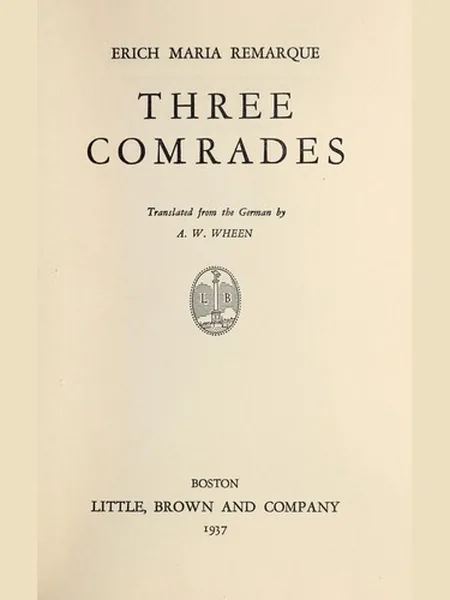
Since 1940 a Little, Brown first printing has normally said "First Edition" or "First Printing" on the copyright page; in the 1930s it carried a single dated "Published" line instead, and from the late 1970s the firm added a number line.
By period
- Before the early 1930s Little, Brown generally put no first edition statement in its books.
- In the 1930s a first printing typically has one line on the copyright page giving the month and year of publication ("Published (month) (year)"). Each reprint adds another dated line, so look for a copy with only the one.
- From 1940 the copyright page of a first printing states "First Edition" or "First Printing".
- In the late 1970s Little, Brown added a number line. A first printing should show the 1, and on a later printing the lowest number left is the printing.
Atlantic Monthly Press
- From 1925 Little, Brown published the Atlantic Monthly Press list under the Little, Brown imprint, and those books follow the Little, Brown method: a single publication-date line on a first printing, with any reprints listed on the copyright page.
Traps
- Reprints keep the original date. A later printing still shows the first copyright and publication date; only the statement, or the extra printing lines, tell you the printing.
- The jacket. A first-printing book can turn up in a later-printing or book club jacket, so judge the jacket separately from the book.
- Book club copies. A club jacket usually has no price on the front flap. Many club copies are smaller than the trade edition, but Book-of-the-Month Club copies are usually the same size and quality, so size alone is no guide: look also for a small blind stamp (a dot, circle or square) on the rear board. BOMC printed prices on some jackets in the 1970s, but those copies still carry the stamp.
Example
- The Catcher in the Rye (Boston, 1951): the first printing is bound in black cloth, and the first-issue jacket has a photograph of Salinger on the back panel.
Authors
Books
Published by Little, Brown




Frequently asked questions
How do I identify a Little, Brown first edition?
- Before the 1930s Little, Brown generally did not mark its first editions. - From the 1930s a first printing typically carries a single line on the copyright page giving the month and year of first publication; each reprint adds a further dated line, so a copy with only one publication line is the one to look for. - Books from the 1940s onwards often state "First Edition" on the copyright page; t
How many Little, Brown books does MyVolumes track?
We track 991 editions published by Little, Brown, 665 of them first editions, across 975 books.
Where these facts come from
- The Casual Vacancy, Little, Brown 2012, first edition listings (The Print Room, All-Ways Fiction), AbeBooks search results, 2026 (abebooks.co.uk)
- Little, Brown London first British editions quoting "First published in Great Britain ... by Little, Brown" (Brothers' Fine and Collectible Books, Carefree Books), AbeBooks search results, 2026 (abebooks.co.uk)
- Little, Brown and Company, Wikipedia (en.wikipedia.org)
- First Edition Identification by Publisher (Allen and Patricia Ahearn), ILAB, 2010 (ilab.org)
- First Editions of Today and How to Tell Them (3rd edn), H. S. Boutell, Internet Archive, 1949 (archive.org)
- Identifying First Editions, A Primer: The Publishers, IOBA (ioba.org)
- Catcher in the Rye, first edition, Bauman Rare Books (baumanrarebooks.com)
- First Edition Points and Criteria for The Catcher in the Rye, FEdPo (Mansion Books) (fedpo.com)
- Printer's key, Wikipedia (en.wikipedia.org)
- Identifying first editions (updated 2024), Bev Vincent, StephenKing.com, 2024 (stephenking.com)
- Book Club Edition Identification, TomFolio (tomfolio.com)
- How To Identify Book Club Editions (part 2), BookThink, 2008 (bookthink.com)
Every fact on this page was checked against the sources listed. Checked 20 October 2026. Reviewed by Harriet Ellis; read how we check facts.