- Random House marks the first printing with the words "First Edition" on the copyright page; the firm stated this policy in 1947.
- On later books the number row on a first printing often starts at 2 rather than 1, with "First Edition" standing in for the missing 1 (for example "First Edition / 2 3 4 5 6 7 8 9"); a row starting at 2 without the statement is a second printing.
- Book club editions are a common trap: their jackets usually carry no price on the front flap, so a priced jacket is one of the first things to check.

Publisher · founded 1927 · New York City
Random House
Random House is an American trade publisher founded in 1927 by Bennett Cerf and Donald Klopfer, now part of Bertelsmann's Penguin Random House.
- Editions tracked
- 843
- First editions
- 539
- Books
- 834
- Years
- 1900 to 2024
About Random House
Random House is an American general trade publisher founded in New York in 1927 by Bennett Cerf and Donald Klopfer, and today an imprint and publishing group within Penguin Random House.
Cerf and Klopfer had bought the Modern Library reprint series in 1925 and started Random House to publish other books "at random" alongside it. In 1934 it published the first authorised English-language edition of James Joyce's Ulysses, and in 1936 it bought the publisher Smith and Haas. It added Alfred A. Knopf in 1960 and Pantheon in 1961.
Random House went public in 1959 and was bought by RCA in 1965, Advance Publications in 1980 and Bertelsmann in 1998. In 2013 it merged with Penguin to form Penguin Random House, wholly owned by Bertelsmann since 2020 and based at 1745 Broadway, Manhattan.
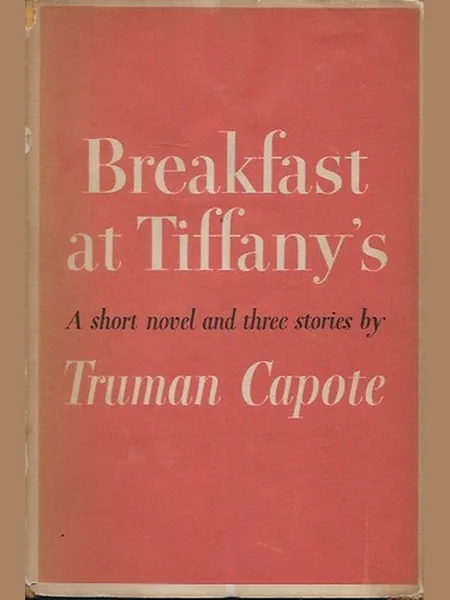
Books it first published include Truman Capote's Breakfast at Tiffany's (October 1958, with three other stories), Maya Angelou's I Know Why the Caged Bird Sings (February 1969) and Cormac McCarthy's Blood Meridian (April 1985).
Holding a copy? The first edition checker shows Random House's practice for the year on your title page.
Identification
How to identify Random House first editions
Random House marks a first printing with the words "First Edition" on the copyright page and drops them from later printings; for decades its number line on a first printing began or ended at 2, not 1, so the statement, not the line, decides it.
By period
- In its first years Random House issued mainly limited editions, and for those the colophon gives the edition details; the firm said so in 1928, and in 1947 it still treated limited editions as the exception to the "First Edition" rule.
- Its trade first printings carry "First Edition" on the copyright page, a policy the firm confirmed in a 1947 statement.
- Later printings are not marked as such. They simply lack the statement, so its absence is the main sign of a reprint.
Number lines
- From the 1970s the number line on a first printing has no 1 and starts or ends at 2, with "First Edition" standing in for the missing 1 (for example "First Edition / 2 3 4 5 6 7 8 9"). The same line without the statement is a second printing.
- Random House later began to include the 1 on first printings, after complaints from collectors, while still removing the statement from reprints.
-
Villard followed the same method.
-
The Modern Library is a reprint series, so its volumes are not first editions of the text; the first printing of a title in the series usually says "First Modern Library Edition" on the copyright page.
Traps
- Reading the line by itself. The general "lowest number is the printing" rule will misread every Random House first printing of the period as a second. Always look for the statement.
- Book club copies. Book-of-the-Month Club copies are usually the same size and quality as the trade edition, so size is no guide. Look instead for a jacket with no price on the front flap and a small blind stamp (a dot, circle or square) low on the rear board. BOMC printed prices on some jackets in the 1970s, but those copies still carry the stamp.
- Some club printings keep the "First Edition" wording, so a club copy can look like a first on the copyright page.
Examples
- A Random House copyright page of the 1980s reading "First Edition" above "2 3 4 5 6 7 8 9" is a first printing; the same page with the words gone and the line unchanged is the second printing.
- The first printing of Black House (2001) by Stephen King and Peter Straub has a first edition statement (dealers quote it as "First Trade Edition") above the line 2 4 6 8 9 7 5 3.
Authors
Books
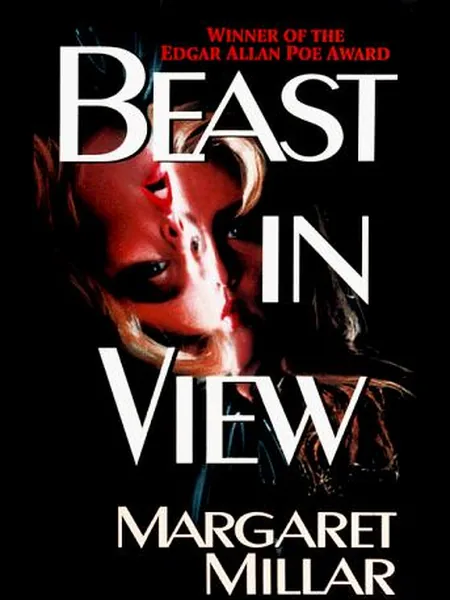
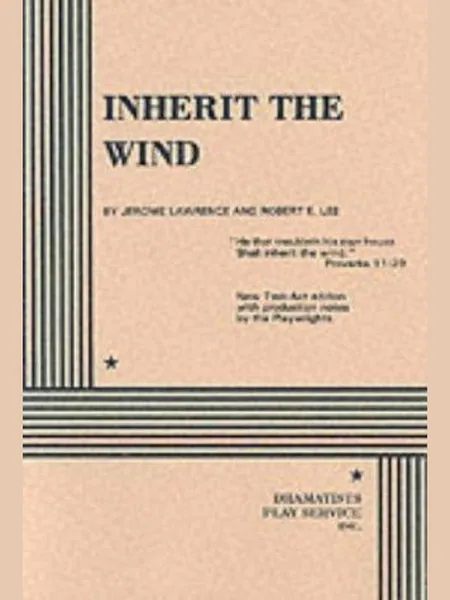
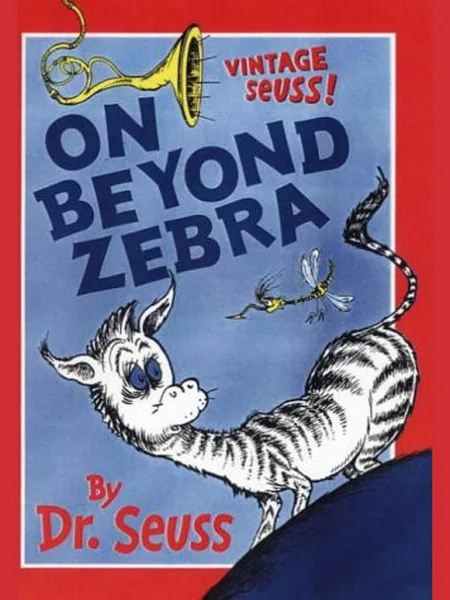
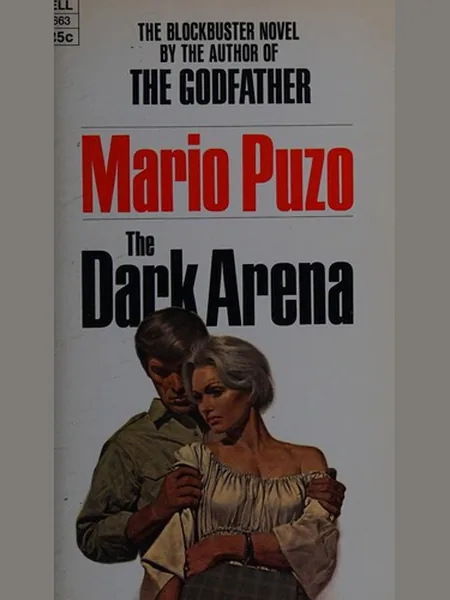
Published by Random House




Frequently asked questions
How do I identify a Random House first edition?
- Random House marks the first printing with the words "First Edition" on the copyright page; the firm stated this policy in 1947. - On later books the number row on a first printing often starts at 2 rather than 1, with "First Edition" standing in for the missing 1 (for example "First Edition / 2 3 4 5 6 7 8 9"); a row starting at 2 without the statement is a second printing. - Book club editions
How many Random House books does MyVolumes track?
We track 843 editions published by Random House, 539 of them first editions, across 834 books.
Where these facts come from
- Random House, Wikipedia (en.wikipedia.org)
- Random House UK imprint first impressions quoting 1 3 5 7 9 10 8 6 4 2 (Orlando Booksellers, Barbidder Books, Ryde Bookshop, Little Stour Books), AbeBooks search results, 2026 (abebooks.co.uk)
- Printer's key, Wikipedia (en.wikipedia.org)
- First-Edition: Identification by Publisher (Allen and Patricia Ahearn), ILAB, 2010 (ilab.org)
- First Editions of Today and How to Tell Them (3rd edn), H. S. Boutell, Internet Archive, 1949 (archive.org)
- Identifying First Editions, A Primer: The Publishers, Independent Online Booksellers Association (ioba.org)
- How to Identify Random House First Editions, Kristin Masters, Books Tell You Why, 2013 (blog.bookstellyouwhy.com)
- Identifying first editions (updated 2024), Bev Vincent, StephenKing.com, 2024 (stephenking.com)
- A Guide to Understanding Number Lines in Books, Craig Stark, BookThink, 2007 (bookthink.com)
- How To Identify Book Club Editions (part 2), BookThink, 2008 (bookthink.com)
- Book Club Edition Identification, TomFolio (tomfolio.com)
- Black House (Random House, 2001) first printing listings, Meier and Sons Rare Books, Inkberry Books, The BiblioFile and Mattabesset Books, AbeBooks, 2026 (abebooks.co.uk)
Every fact on this page was checked against the sources listed. Checked 20 October 2026. Reviewed by Harriet Ellis; read how we check facts.