Most Easton Press and Franklin Library books are worth a modest sum, not a fortune. They are well made, bound in leather with gilt decoration, but both publishers sold them by subscription in large numbers, and many titles were issued again and again. The books that hold real value are the signed and genuinely limited editions, a handful of strong series such as Easton's signed science fiction, and complete sets in fine condition. This guide explains what each publisher was, which books stand out, and how condition affects the price.
What Easton Press is
Easton Press is a publisher of leather-bound books based in Norwalk, Connecticut. It is a division of MBI, Inc., which also owns the Danbury Mint. It dates from the 1970s, though sources differ on the exact year. Easton is still trading, and sells many of its books in monthly subscription series.


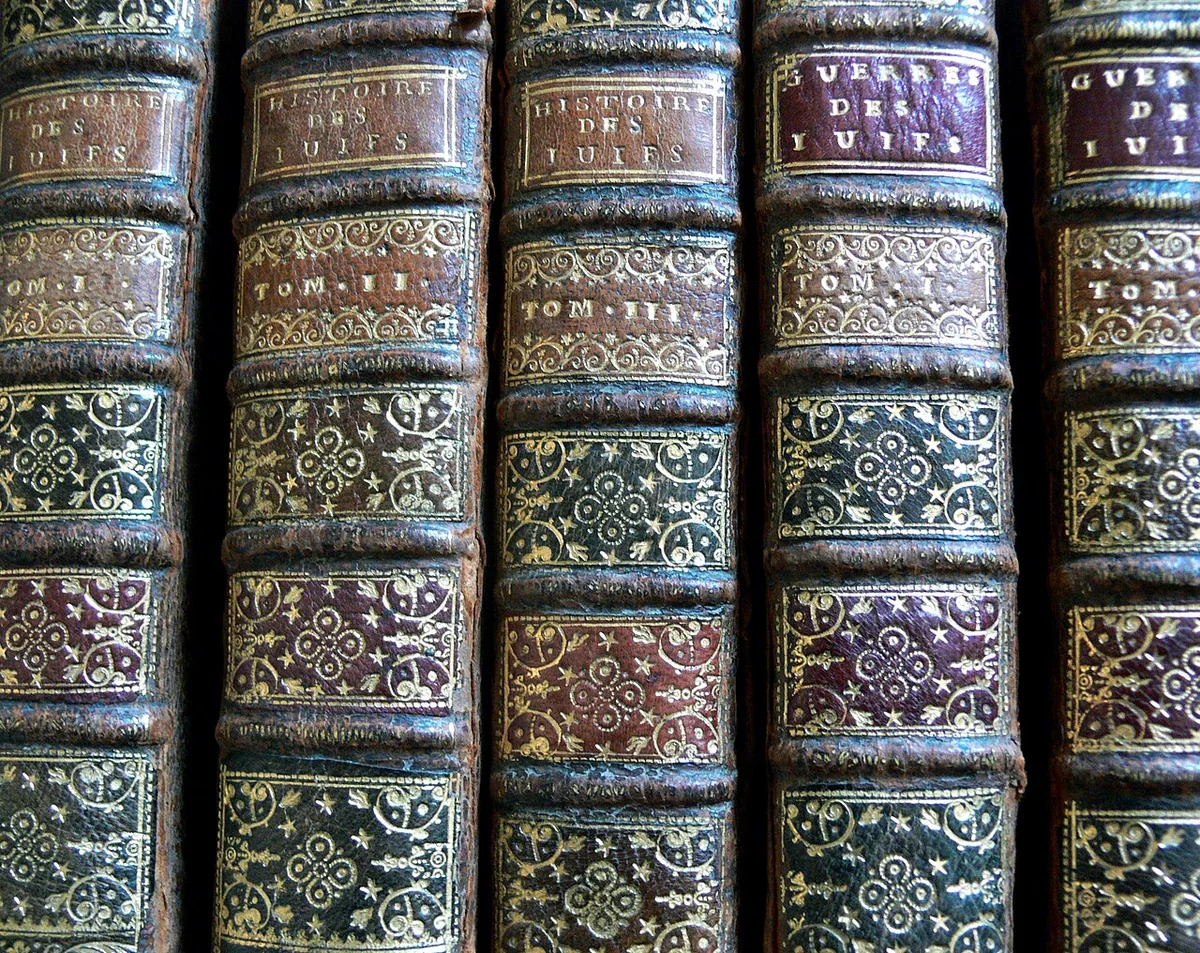
Its range covers the classics, religion, poetry, art, history and some science fiction and modern fiction. Typical features are full leather covers, raised bands on the spine, gilt decoration, gilt page edges, a sewn-in ribbon marker and silk moiré endpapers. Easton also bought the Heritage Press, which had issued cheaper versions of Limited Editions Club books, so many Easton texts and illustrations repeat those earlier editions.
Its best-known series include:
- The 100 Greatest Books Ever Written
- Masterpieces of American Literature
- The Library of the Presidents (also called the Library of American Presidents)
- The Library of American History
- The Masterpieces of Science Fiction
- Signed First Editions and Signed Modern Classics
What the Franklin Library was
The Franklin Library was the publishing arm of the Franklin Mint, the collectables company founded by Joseph Segel in 1964. It published its first book in 1973 and closed in 2000. Its books carry the imprint of Franklin Center, Pennsylvania, and were designed and bound by The Sloves Organization. Franklin competed directly with Easton for the market in fine leather-bound books, and in the end lost out to it.
Franklin books were sold only to subscribers. Most series ran to around 100 volumes, issued one a month, so finishing a set took years. Its major series include:
- The 100 Greatest Books of All Time (1974 to 1982)
- The 100 Greatest Masterpieces of American Literature (1976 to 1984)
- Pulitzer Prize Classics (1975 to 1980)
- The signed limited editions, from 1977
- The First Edition Society, which began unsigned and was later renamed the Signed First Edition Society, with books signed by the author and sometimes numbered
Franklin bound books three ways: full leather, a leather-like cloth, and quarter leather. The cloth and quarter-leather styles were used only in the 1970s and 1980s. Full leather copies, made throughout, have a satin ribbon marker and are the better binding.
Why most copies are worth modest sums
Both publishers made books to order for subscribers, and that shapes the market today.
- Large, open runs. Franklin issued most titles as open editions with no stated limit, and no reliable print run figures exist. BookThink's 2013 guide to Easton noted that most Easton titles have no issue limit, are reissued often, sometimes in different bindings, and are usually undated.
- Monthly subscriptions. Both houses shipped a volume a month to each subscriber, so the most popular series reached many homes, and those copies now come back onto the market through house clearances and estate sales.
- Some limits are marketing. BookThink gave the example of an Easton two-volume Three Musketeers advertised as limited to 400 copies, when the same title was mass-produced in the 100 Greatest Books series.
The prices bear this out. Writing in April 2013, BookThink reported that common Easton titles from the 100 Greatest Books Ever Written often struggled to reach $10 to $15 on eBay, while copies still sealed in their shrink wrap sometimes made $40 or more. It also noted that Easton books were no longer the automatic buy for dealers they had once been. These are 2013 figures, so check current sold prices before relying on them. Our guide on how much your book is worth explains how to do that.
Neither publisher's books are first editions of the classic texts they reprint. A leather Moby Dick from either house is a fine reading copy, not a rare book. The same logic applies to book club editions.
Which ones command more
Easton's signed science fiction. BookThink's 2013 guide called the Signed Science Fiction First Editions a consistently strong series, and said buying almost any title from it was the right call more than nine times in ten. Authors included Isaac Asimov, Frederik Pohl and Andre Norton.
Signed Modern Classics and Masterpieces of Science Fiction. The same guide named these as series that sell well, with authors such as Ray Bradbury, Kurt Vonnegut and Hunter S. Thompson.
Signed presidential volumes. Signed Library of the Presidents books by presidents who have died, such as Nixon, Ford and Reagan, form a closed group that cannot grow. BookThink reported a signed Nelson Mandela Long Walk to Freedom selling for $1,000 to $2,000 or more in 2013.
Franklin's signed limited editions. These are the scarcest and most sought-after Franklin books. The author signed a separate leaf that was bound into the book, so the signature is genuine. Other Franklin firsts carry only a printed facsimile of the signature in the introduction, which adds nothing. Learn to tell the two apart with our guide to signed and inscribed books, and see tipped-in for how added leaves are described.
Complete sets. A full run is often worth more than the same volumes sold one by one, for both publishers, because sets were slow and costly to finish.
Stated limitations deserve care. For how to judge a limitation statement, see our guide to limited and special editions.
Condition specifics
Condition makes a larger difference here than with most books, because buyers can choose among many copies. BookThink lists the faults that most often cut the price:
- Rubbed gilt on the front board or the spine panel.
- Scratched or speckled gilt edges on the text block, which show wear first along the bottom.
- Bumped corners, especially the bottom corners.
- Bookplates stuck onto the moiré endpapers, which lower value and can leave residue if removed.
- Ribbon markers. The ribbon was originally tucked in, so tuck it back in before photographing or storing the book.


Easton books were issued without dust jackets, so a missing jacket is not a fault. What matters is the original material that came with the book. Easton's signed editions were issued with a certificate of authenticity, often signed by the author, a note about the book and the author, and an unused personalisation plate. Collectors want these kept with the book. Easton copies were also often issued with a publisher's brochure or introduction laid in, which is worth keeping.
Grade each copy carefully using our book condition grading guide.
How to tell Easton Press from Franklin Library
The two can look alike at a glance, with leather, gilt and ribbons. Check these points:
- Title page imprint. Easton books read Norwalk, Connecticut, and The Easton Press. Franklin books read Franklin Center, Pennsylvania, and The Franklin Library.
- Date. Franklin stopped publishing in 2000, so any leather-bound book dated after that is not a Franklin. Many Easton books carry no date at all.
- Binding material. A Franklin book in leather-like cloth or quarter leather dates from the 1970s or 1980s, the years Franklin used those cheaper bindings.
- Series name. Easton's 100 Greatest Books Ever Written and Franklin's 100 Greatest Books of All Time are different series from different publishers.
- Signatures. Look for a real signed leaf, and for Easton, a certificate. A printed signature in the introduction is a facsimile.

Check your copy
Work through these steps before you price or sell an Easton Press or Franklin Library book:
- Confirm the publisher. Read the title page imprint and note any date.
- Identify the series. Note the series and whether the book is part of a set you can complete.
- Look for a genuine signature. Check for a signed leaf or limitation page, and for Easton, the certificate and notes card.
- Check the gilt and corners. Look in good light at the spine, boards and page edges.
- Look inside the front board. Note any bookplate, writing or residue on the endpaper.
- Check the market. Use our is my book valuable tool, or scan the book to log it in your collection. If you decide to sell, our guide to where to sell rare books in the UK compares the options.
Frequently asked questions
Are Easton Press books worth anything?
Most are worth a modest sum second-hand, because popular titles were reissued many times and sold by subscription. Signed editions, especially Easton's signed science fiction firsts, and fine complete sets are the main exceptions.
Is Easton Press worth collecting?
Yes, if you collect them as well-made reading and display copies. Treat ordinary titles as books to enjoy rather than investments, and buy the best condition you can find, as rubbed gilt and bookplates cut the price.
Are Franklin Library books valuable?
Most Franklin Library books were open editions with no fixed print run, so ordinary volumes are common. The signed limited editions, where the author signed a leaf bound into each copy, are the most sought after, and complete sets can be worth more than their volumes sold singly.
What is the difference between Easton Press and Franklin Library?
Easton Press is based in Norwalk, Connecticut, is a division of MBI, Inc. and is still publishing. The Franklin Library was the book arm of the Franklin Mint, published from Franklin Center, Pennsylvania, and operated from 1973 until 2000.
Does an Easton Press signed edition need its certificate?
Easton's signed editions were issued with a certificate of authenticity, often signed by the author, plus a note about the book. Keep them with the book: a complete copy with all its original inserts is what buyers look for.
Where these facts come from
- Easton Press, Wikipedia, accessed 2026 (en.wikipedia.org)
- The Franklin Mint, Wikipedia, accessed 2026 (en.wikipedia.org)
- Franklin Library, Wikipedia (archived 2007 copy), accessed 2026 (wikipedia.classicistranieri.com)
- A 2013 Guide to Buying and Selling the Easton Press, Part I: What to Look For, Craig Stark, BookThink, April 2013 (bookthink.com)
- A 2013 Guide to Buying and Selling the Easton Press, Part II: Marketing to Maximize Outcomes, Craig Stark, BookThink, April 2013 (bookthink.com)
- Franklin Library Editions: Ideal for Book Collectors?, Kristin Masters, Books Tell You Why, 2017 (blog.bookstellyouwhy.com)
- The Easton Press leather bound books, Townsend Books, accessed 2026 (townsendbooks.com)
- The Easton Press, Library of American History, Townsend Books, accessed 2026 (townsendbooks.com)
- 30 Franklin Library signed limited editions, Leland Little Auctions, November 2025 (lelandlittle.com)
- Library Additions: Jack McDevitt Easton Press editions, Lawrence Person's Futuramen, 2022 (lawrenceperson.com)
Points of issue are listed only where at least two independent sources agree. Last reviewed 18 October 2026. Reviewed by Harriet Ellis; read how we check facts.
Last reviewed 18 October 2026.