Limited edition books are printed in a fixed number of copies that the publisher states in the book, usually numbered by hand and sometimes signed by the author or artist. That promise of scarcity is what collectors pay for, so the first job with any limited or special edition is to read exactly what was promised and check your copy against it. This guide explains the main kinds, how to read a limitation statement and which special editions are worth collecting.
What counts as a limited edition
A true limited edition has three features:
- A stated total, printed in the book: "This edition is limited to 500 copies".
- An identity for each copy, usually a number written in by hand, sometimes a letter.
- No reprinting of that edition once the run is sold.
Signatures are common but not required. Many limited editions are signed by the author, the illustrator or both, often on the limitation page itself.
Within one limited edition there can be several tiers:
| Tier | Typical size | What it usually means |
|---|---|---|
| Numbered copies | Tens to a few thousand | The main limited run, sold to subscribers or the public |
| Lettered copies | Often 26, marked A to Z | A smaller, more special run, sometimes not sold at all |
| Copies on special materials | A handful | Printed on vellum or special paper, or in a finer binding |
| Out of series copies | Unstated | Unnumbered extras for the press, author or reviewers |
The more special the tier, the fewer copies, and the higher the price when one appears.
Large-paper and publisher's deluxe editions
Before the modern "special edition", publishers marked important books by issuing a few copies on bigger, better paper alongside the ordinary trade edition. These large-paper editions use the same text with wider margins, and they are usually numbered and signed.
The best known British example is Winnie-the-Pooh. In 1926 Methuen published the trade first edition and, alongside it, a large paper edition of 350 numbered copies on handmade paper, signed by A.A. Milne and E.H. Shepard. Methuen did the same for The House at Pooh Corner in 1928. The trade first edition is a different book in a different binding, so check which one you have before you compare prices.
Publishers also issued deluxe copies in leather or with extra illustrations. Some were limited and numbered; others were simply a more expensive binding of the trade edition, with no limitation at all. Only a stated, numbered limitation makes a copy a limited edition.
Private press books
Private presses print books by hand, in small editions, as works of craft. Their limitation is usually stated in the colophon at the back rather than at the front. Collectors value the printing, paper, type and binding as much as the text.


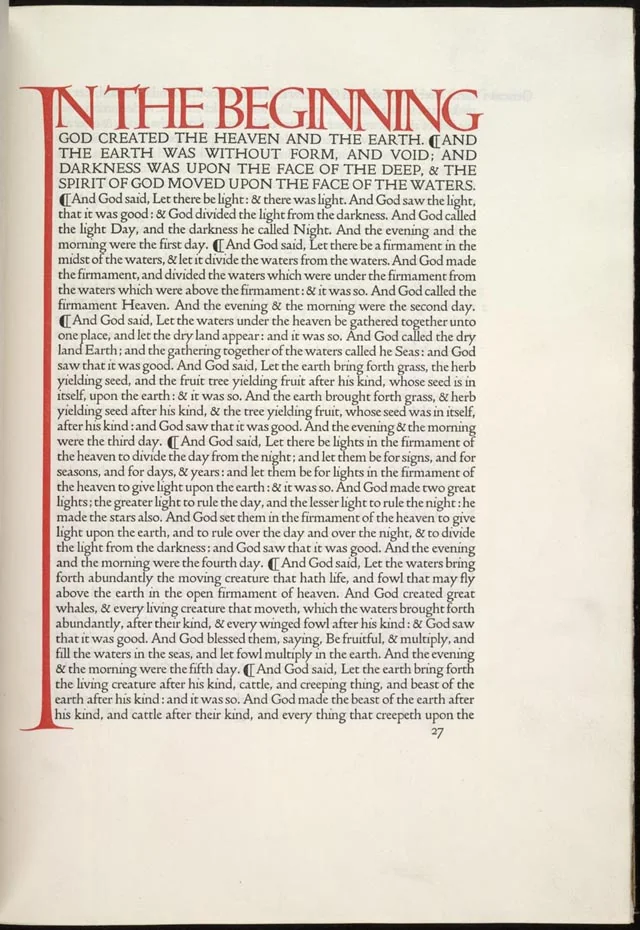


The landmark is the Kelmscott Chaucer, printed by William Morris's Kelmscott Press and finished in 1896. The edition was 425 copies on paper and 13 on vellum. In January 2025 RR Auction sold a paper copy in its original quarter linen binding for $68,750.
Twentieth-century British presses such as the Golden Cockerel Press and the Nonesuch Press followed with numbered editions, often illustrated with wood engravings. Their books are generally more affordable than Kelmscott, and condition, the binding and the illustrator drive the price.
The Folio Society: standard and limited
Most Folio Society books are standard editions: well made, but reprinted as needed and not limited. Separately, the Society publishes limited editions announced as such, with a numbered limitation and often finer materials.
Its Letterpress Shakespeare series is a good example. The 2008 volumes were printed by letterpress, half-bound in goatskin and issued in 3,750 hand-numbered copies for members, plus 25 lettered copies not for sale. That is a large run by private press standards, so condition and completeness (the box, the companion volume, any printed ephemera) matter a great deal on resale.
Browse Folio titles in our Folio Society series listing to see which editions we hold.
Deluxe editions versus mass-market special editions
Publishers now issue many books called "special", "collector's" or "anniversary" editions: sprayed page edges, foil covers, exclusive art or a bookshop-only jacket. These can be lovely, but they are usually printed to demand, not to a stated limit.
A useful test:
- Stated and numbered limitation: potentially collectable, especially if small and signed.
- "Limited" with no number stated: treat as a marketing term; the run may be large or open-ended.
- Exclusive editions sold through one retailer: often printed in large numbers; may find a market among fans, but values are uncertain and often fall after release.
- Reprints described as "first edition thus": collectable only in their own right, not as the first edition of the text.
If a special edition is signed, our guide to signed and inscribed books explains how tipped-in signed pages compare with signatures written in the book.
How to read a limitation statement
The limitation statement tells you what your copy should be. Read it closely and check each claim:
- The total: "limited to 350 copies". Is it the total, or only the copies for sale?
- The tiers: are there lettered or special copies as well as numbered ones?
- Your copy's number: written by hand in the space provided. A blank space may mean an out of series copy, or a copy that was never finished.
- Signatures: if the statement says "signed by the author and artist", both signatures must be present.
- Materials: paper, binding and any slipcase or box named in the statement should match your copy.
- Location: the limitation page is usually near the front, but private press books often put it in the colophon at the end.


Then check the copy: the right binding, any slipcase, prospectus or extra plates that came with it. A limited edition missing its slipcase or a signature is an incomplete copy, and priced as one.
What is and is not collectable
Limited editions hold value when the book matters and the limitation is genuinely small. In broad terms:
- Usually collectable: signed large-paper issues of major books, private press books from the important presses, small signed limited editions of significant authors, and lettered copies.
- Sometimes collectable: publisher's limited editions of popular titles, depending on run size and condition.
- Rarely collectable: "special editions" without a stated limitation, and large signed runs of books that were never in demand.
Condition and completeness count for more on limited editions than on trade books, because buyers expect them to have been kept with care. Before you value one, check:
- The box or slipcase, if one was issued, and whether it is sunned or split.
- The spine and boards, especially pale cloth, vellum or paper sides that mark and fade easily.
- Any extras named in the limitation or the prospectus: a separate suite of plates, a signed print, a booklet.
- The paper, for foxing or browning, which handmade papers can show.
A fine copy of a modest private press book can outsell a worn copy of a grander one.
Remember that a limited edition is usually not the first edition of a text. Collectors of a title often want both, and they are valued separately. See how to identify a first edition for the trade edition.
Check your copy
Look up your book on Browse and open the edition page: where we list a limited or large-paper issue, it has its own page with its limitation and points. Compare the limitation statement in your copy with what we record, check the signatures and number, and grade the condition with our condition guide.
Frequently asked questions
What makes a book a limited edition?
A limited edition is printed in a fixed number of copies stated in the book itself, usually on a limitation page that gives the total and the number of your copy. If the publisher can print more whenever demand rises, it is not truly limited.
Are lettered copies worth more than numbered copies?
Usually yes. Lettered copies are a smaller run, often 26 copies marked A to Z, set aside for the author, publisher or a special binding. Because there are fewer of them they tend to fetch more than numbered copies of the same edition.
Does copy number 1 make a limited edition more valuable?
A low number, especially number 1, appeals to some buyers and can add a modest premium. Condition, signatures and completeness matter far more than the number in nearly every case.
Are Folio Society books limited editions?
Most Folio Society books are not limited: they are standard editions reprinted as needed. The Society also publishes separately announced limited editions, numbered and often more elaborately bound, and those are the ones with a stated limitation.
What does out of series mean on a limited edition?
An out of series copy is an extra copy printed alongside the limited edition but without a number, often kept for review, the author or the printer. It is genuine, but collectors usually value it a little below a numbered copy.
Where these facts come from
- Edition record for Chaucer, The Works (Kelmscott Press, 1896), Victoria and Albert Museum (collections.vam.ac.uk)
- Kelmscott Chaucer sold for $68,750 at auction, Fine Books and Collections, 2025 (finebooksmagazine.com)
- The finest book since Gutenberg: Kelmscott Chaucer achieves $68,750 at auction, RR Auction, 2025 (content.rrauction.com)
- Shakespeare, The Tempest, Letterpress Shakespeare (Folio Society, 2008), Lucius Books (luciusbooks.com)
- Shakespeare, A Midsummer Night's Dream, Letterpress Shakespeare (Folio Society, 2008), Maggs Bros (store.maggs.com)
- A.A. Milne, Winnie-the-Pooh, large paper edition, 1st edition limited to 350 signed, Nate D. Sanders Auctions, 2020 (natedsanders.com)
- Limited edition (ltd ed), Independent Online Booksellers Association (ioba.org)
Points of issue are listed only where at least two independent sources agree. Last reviewed 17 October 2026.
Last reviewed 17 October 2026.