No. An ISBN cannot tell you whether a book is a first edition, and it certainly cannot tell you whether it is a first printing. The number identifies a particular edition in a particular format from a particular publisher, and the rules that govern it say that an unchanged reprint keeps the same number. A first printing and a twentieth printing of the same hardback will, in almost every case, show the same ISBN.
That is the short answer to one of the questions people most often type into a search engine with a book in their hand. The longer answer is more useful, because the ISBN does tell you some things, and knowing what it can and cannot do saves you from two common mistakes: trusting a matching number as proof of a first, and dismissing a copy because its number differs from one you saw online.
If you already know your ISBN, type it into Add by ISBN or scan the barcode and we will show you the edition it belongs to and the printings we have recorded for it. To find the printing itself, you will need the copyright page, and our number line decoder reads it for you.
What an ISBN actually identifies
An International Standard Book Number is a product code. The International ISBN Agency, which runs the system, puts it plainly: a separate number is assigned to each edition and each format of a publication, but not to reprintings. A hardback, a paperback, an ebook and an audiobook of the same text each need their own ISBN. A second printing of the hardback, with nothing changed, does not.
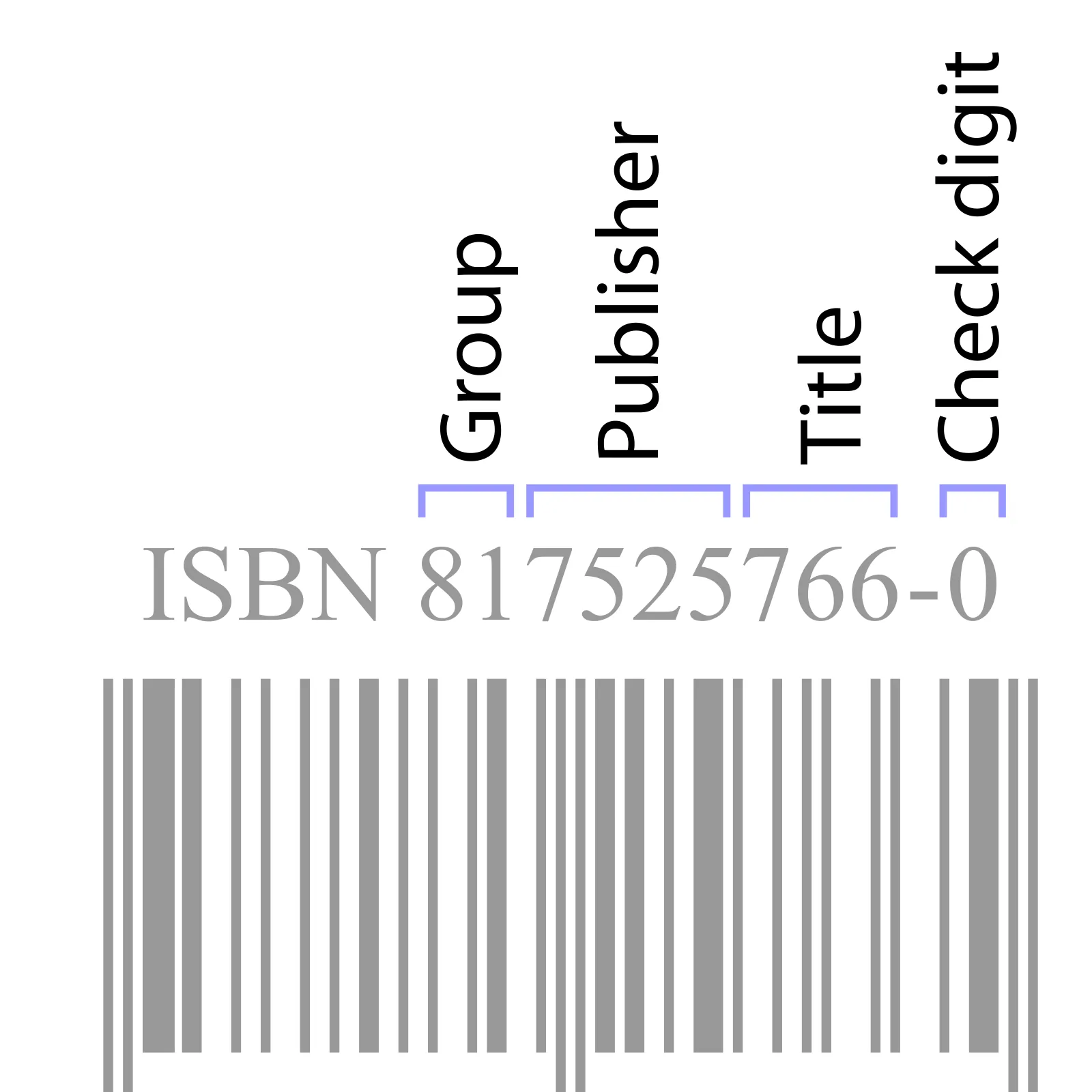

The number is built from parts, and none of them has anything to do with printings. A modern thirteen-digit ISBN has five elements: a prefix (978 or 979), a registration group for a country or language area, a registrant element for the publisher, a publication element for the particular book, and a check digit. The older ten-digit form had the same structure without the prefix, which is why any ten-digit ISBN can be turned into its thirteen-digit equivalent by adding 978 and recalculating the last digit.
So when you read an ISBN, you learn which publisher issued the book, roughly where, and which of that publisher's products it is. You do not learn when the copy in your hand came off the press.
The rules publishers follow
The ISBN agencies publish the rules for when a new number is needed, and they are consistent on both sides of the Atlantic.
| Change to the book | New ISBN? | Who says so |
|---|---|---|
| Unchanged reprint, same publisher | No. The original number must be kept | International ISBN Agency; Nielsen UK ISBN Agency |
| New cover design, text unchanged | No | Nielsen UK ISBN Agency |
| Change of price | No, and the number must not change | International ISBN Agency; Nielsen UK ISBN Agency |
| Substantial change of text (a revised edition) | Yes | International ISBN Agency |
| Different format or binding (hardback to paperback, print to ebook) | Yes | International ISBN Agency; Nielsen UK ISBN Agency |
| Change of title | Yes | International ISBN Agency |
| Republished by a different publisher or imprint | Yes, from the new publisher's own block | International ISBN Agency; Nielsen UK ISBN Agency |
The first row is the one that matters for collectors. A publisher that reprints a book ten times without altering the text or the binding is required to keep the original ISBN on every one of those printings. The number is the same on the first and the tenth because the rules say it must be.
The other rows explain the opposite case. If your copy carries a different ISBN from the recorded first edition, it is a different edition, a different format, or a different publisher's issue, and that does rule it out as the first. The ISBN can disqualify a copy; it cannot qualify one.
A worked example: the Bloomsbury Philosopher's Stone
The first Harry Potter book is the clearest case because so many people check it. The 1997 Bloomsbury hardback of Harry Potter and the Philosopher's Stone carries ISBN 0-7475-3269-9 (978-0-7475-3269-9 in the thirteen-digit form). Library and bookseller records agree on that number for the hardback edition.
That hardback was reprinted many times as the book took off, and every one of those printings is the same edition in the same format from the same publisher. The number did not change. What auction houses and dealers look for instead, as Tennants explained when it sold a first impression in 2021, is the copyright page: the full number line running from 10 down to 1, the 1997 date, and the publisher named as Bloomsbury on the title page. Our guide to Harry Potter first editions goes through those points one by one.
The ISBN still does a useful job here. It separates the trade hardback from the paperback issued under 0-7475-3274-5, from the 1999 deluxe hardback with its own number, and from the countless later editions with different covers. If a copy offered as a 1997 Bloomsbury first shows any ISBN other than 0-7475-3269-9, something is wrong. If it shows the right one, you have narrowed the field to one edition and must then read the copyright page.
The same point in an American book
American publishers follow the same rules. Scholastic's hardback of Harry Potter and the Sorcerer's Stone, published in 1998, is a different edition from the Bloomsbury book, with a different text and a different ISBN, 0-590-35340-3. Scholastic's paperback of 1999 is a different format again and carries 0-590-35342-X. Three editions, three numbers.
Within each of those editions, though, the printings share the number. The Scholastic hardback went through a very large number of printings, and sellers routinely describe copies as a "25th printing" or a "36th printing" under the same ISBN. The thing that tells them apart is the number line and the printing statement on the copyright page, not the barcode on the jacket.
When a copyright page shows you everything
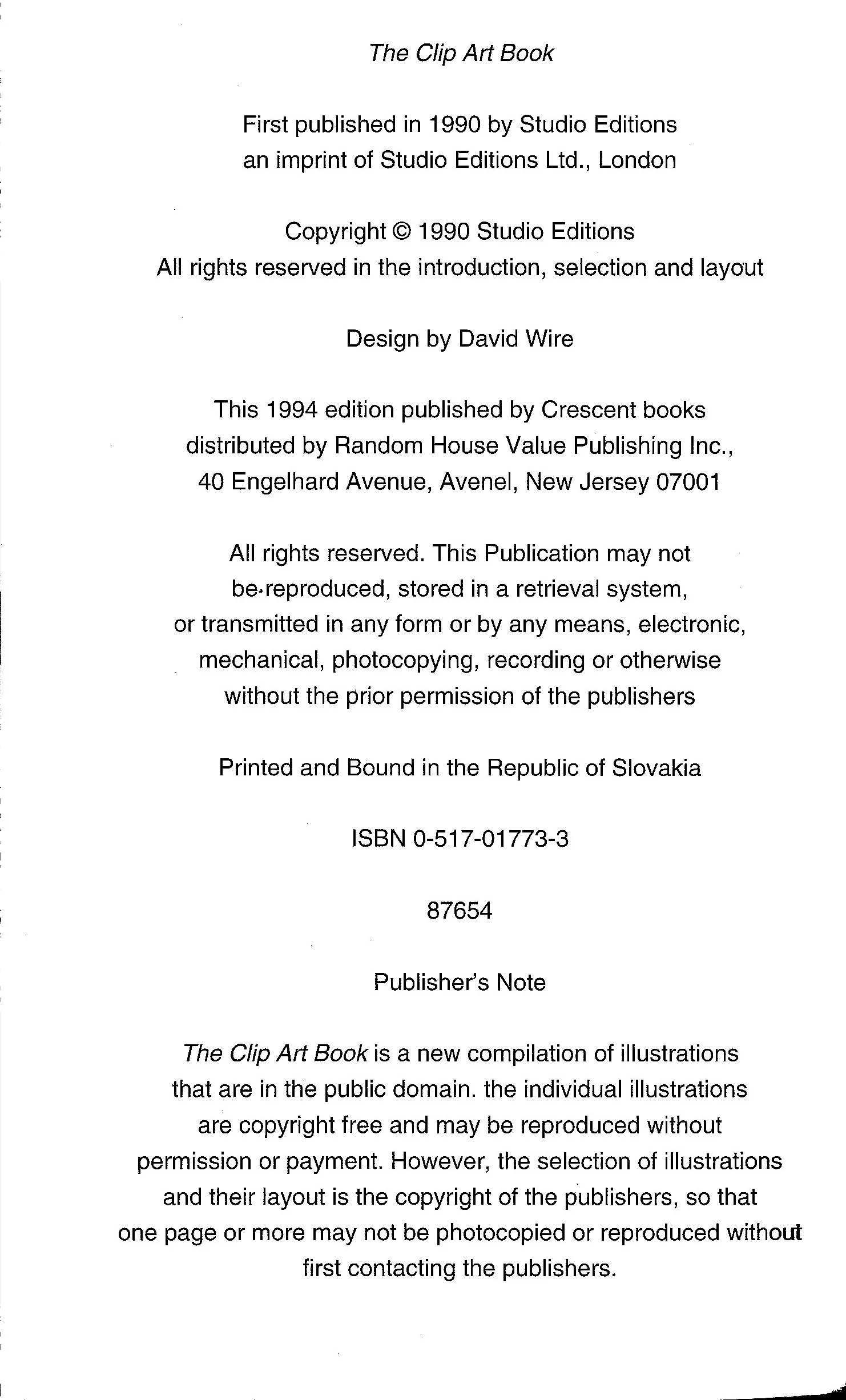

The copyright page above, from an inexpensive reference book, is a neat demonstration of the whole argument. It records that the book was first published in 1990 by Studio Editions in London; that the copy in hand is a 1994 edition issued by Crescent Books, distributed by Random House Value Publishing in New Jersey; and it gives the ISBN of that 1994 issue, 0-517-01773-3. Below the number sits a line reading 8 7 6 5 4.
Read in order, that tells you three things the ISBN alone never could. The book is not the 1990 first edition: a different publisher reissued it, so it carries that publisher's number. The 1994 reissue is itself an edition that was reprinted: the lowest number in the line is 4, so this is its fourth printing. And every copy of the 1994 reissue, from the first printing to this fourth, carries the same ISBN.
What the number can tell you
Used for what it is, the ISBN is a quick and honest witness to a few facts.
- Which edition and format you hold. Match it against a recorded first edition and you know at once whether you are looking at the same book or a later paperback, a book club issue or a reprint house's reissue.
- Who published this issue. The registrant element belongs to a publisher. A copy of a 1960s novel whose ISBN belongs to a 1990s reprint publisher is a reprint, whatever the title page says.
- Roughly when the number was assigned. Standard Book Numbers of nine digits were used in Britain from 1966 to 1974, ten-digit ISBNs from 1970, and thirteen-digit ISBNs from 1 January 2007, when publishers were required to stop printing the ten-digit form. A copy of a 1995 novel that shows only a thirteen-digit ISBN was printed in or after 2007.
- That no ISBN is normal on an older book. The system did not exist before the late 1960s, and books published earlier have no number. Its absence is not a flaw and not a sign of a first edition either.
What the number cannot tell you
- The printing. This is the whole point. First and later printings of an unchanged edition share the number.
- Whether the text has been quietly corrected. Minor corrections between printings do not trigger a new ISBN, so two copies with the same number can differ in small points. Those small differences are exactly what collectors record as points of issue.
- Whether a book club produced the copy. Club editions sometimes reproduce the trade publisher's copyright page, number and all, and sometimes carry no ISBN. Read our guide to book club editions for the physical tells.
- Whether the jacket belongs to the book. The ISBN printed on a jacket or cover is a separate piece of paper from the ISBN on the copyright page. A later jacket on an earlier book is common, so check that the two agree, and treat the copyright page as the authority.
What to use instead
Finding a first printing is a matter of reading the book, and the ISBN is the least informative line on the page. Work through the copyright page in this order.
- The publication statement. "First published in 1996" with nothing beneath it, or "First Edition" or "First Printing", is the starting point. A reprint list or a "Second impression" line settles the matter the other way. Our guide to how to identify a first edition covers British and American habits.
- The number line. On most books from the 1970s onwards, the lowest number in the line is the printing. Type yours into the number line decoder if you are not sure how to read it, or read number lines explained for the layouts and the publishers that break the rule.
- The points of issue. For books that collectors value, the first printing is often told from the second by a misprint, a jacket price or a binding detail. We list these on each edition's page only when two independent sources agree on them.
- The edition, not just the printing. A 1 in the number line of a paperback means the first printing of the paperback, which is a different thing from the first edition of the work. The difference is explained in first edition vs first printing.
A short history, for the dates that matter
The numbering system began in Britain. In 1965 the bookseller W. H. Smith announced plans for a standard book number, and Gordon Foster of Trinity College Dublin devised the nine-digit Standard Book Number, in use from 1966. David Whitaker developed the international ISBN format in 1967, and the ten-digit ISBN was issued as the international standard ISO 2108 at the start of the 1970s (1970 in most accounts; one agency history gives 1972 for the first edition of the standard). Britain stopped using the nine-digit SBN in 1974. The fourth edition of the standard, in 2005, moved the ISBN to thirteen digits, and from 1 January 2007 publishers had to print only the thirteen-digit form.
Those dates give you a rough calendar. No number means a book printed before about 1967, or a publisher who had not yet joined. A nine-digit SBN places a British printing between 1967 and 1974. A ten-digit ISBN alone places a printing between 1970 and 2006. A thirteen-digit ISBN alone places it in 2007 or later. None of these dates the edition, only the printing in your hand, which is exactly the question you wanted answered.
Check your copy
Enter your ISBN in Add by ISBN, or point your phone's camera at the barcode on the scanner page, and we will match it to the edition we track and list the printings and points we have recorded for it. Then open the copyright page, read the number line with the decoder, and compare what you see with the first printing's points on the edition page. If they match, record the copy in your collection; if they do not, you still know exactly which edition and printing you own, which is more than the barcode could ever tell you.
Frequently asked questions
Does the ISBN tell you which edition a book is?
It tells you which edition and format the publisher assigned the number to, such as the 1997 Bloomsbury hardback rather than the paperback, but not which printing of that edition you hold. Unchanged reprints keep the same ISBN, so a first printing and a later one usually carry the same number.
Can two different editions share an ISBN?
They should not. The ISBN agencies require a new number for a substantial change of text, a new format or binding, a new title or a new publisher. If two books differ in any of those ways and show the same ISBN, one of them has been misnumbered, which does happen but is rare.
Does a different ISBN mean my copy is a later edition?
It means your copy is a different edition, format or publisher's issue from the one whose ISBN you are comparing it with. If the first edition's ISBN is recorded and yours differs, yours is not that first edition. The reverse does not hold: a matching ISBN proves only that you have the same edition, not the first printing of it.
Do first editions have ISBNs?
Only if the book was published after the system arrived. Standard Book Numbers began in Britain in 1966 and the international ISBN followed in 1970, so books published before then have no number at all, and some publishers were slow to adopt it. A first edition from 1950 without an ISBN is exactly what you would expect.
Where is the ISBN on an old book?
On books from the 1970s onwards it is usually printed on the copyright page, the reverse of the title page, and often on the back of the jacket or cover as well. Books from 1967 to 1974 may show a nine-digit SBN instead. Earlier books have neither, so look for the publisher's date and reprint statements.
My copy shows only a 13-digit ISBN but the book came out in the 1990s. What does that mean?
Publishers were required to print 13-digit ISBNs from 1 January 2007. A copy of a 1990s book that carries only the 13-digit form was printed after that date, so it is a later printing of the edition, not a first printing.
Where these facts come from
- ISBN assignment, International ISBN Agency (isbn-international.org)
- Frequently asked questions for existing publishers, Nielsen UK ISBN Agency (nielsenisbnstore.com)
- ISBN, Wikipedia (en.wikipedia.org)
- History of ISBN, CARICOM Regional ISBN Agency (isbn.caricom.org)
- Harry Potter and the Philosopher's Stone, Bloomsbury 1997 hardback, Open Library record for ISBN 0747532699 (openlibrary.org)
- Harry Potter and the Philosopher's Stone, 1997 hardback listings under ISBN 0747532699, Biblio (biblio.co.uk)
- Harry Potter and the Philosopher's Stone, Bloomsbury paperback listings under ISBN 0747532745, Biblio (biblio.co.uk)
- Harry Potter and the Philosopher's Stone, 1999 deluxe hardback listings under ISBN 0747545723, Biblio (biblio.co.uk)
- Harry Potter and the Sorcerer's Stone, Scholastic hardback described as a 25th printing under ISBN 0590353403, eBay listing (ebay.de)
- Harry Potter and the Sorcerer's Stone, Scholastic hardback described as a 36th printing under ISBN 0590353403, eBay listing (ebay.de)
- Harry Potter and the Sorcerer's Stone, Scholastic 1999 paperback, Open Library record for ISBN 059035342X (openlibrary.org)
- First Edition Harry Potter to be sold this Summer, Tennants Auctioneers, 2021 (tennants.co.uk)
- The Clip Art Book, 1994 Crescent Books printing, copyright page, Wikimedia Commons (commons.wikimedia.org)
Points of issue are listed only where at least two independent sources agree. Last reviewed 19 October 2026. Reviewed by Harriet Ellis; read how we check facts.
Last reviewed 19 October 2026.