The quickest way to date a Penguin book is the imprint page, on the back of the title page, which records when the title joined Penguin and every reprint since. Dating Penguin books then becomes a matter of cross-checking: the cover design, the price and the lists of other titles all belong to particular years. This guide takes you through each clue in the order collectors use them.
Where Penguin began
Allen Lane launched Penguin on 30 July 1935 with ten paperbacks at sixpence each, the price of a packet of cigarettes. They were reprints of books already published in hardback, and the first of them, Ariel by André Maurois, became Penguin No. 1. Agatha Christie's The Mysterious Affair at Styles was in the same first batch.


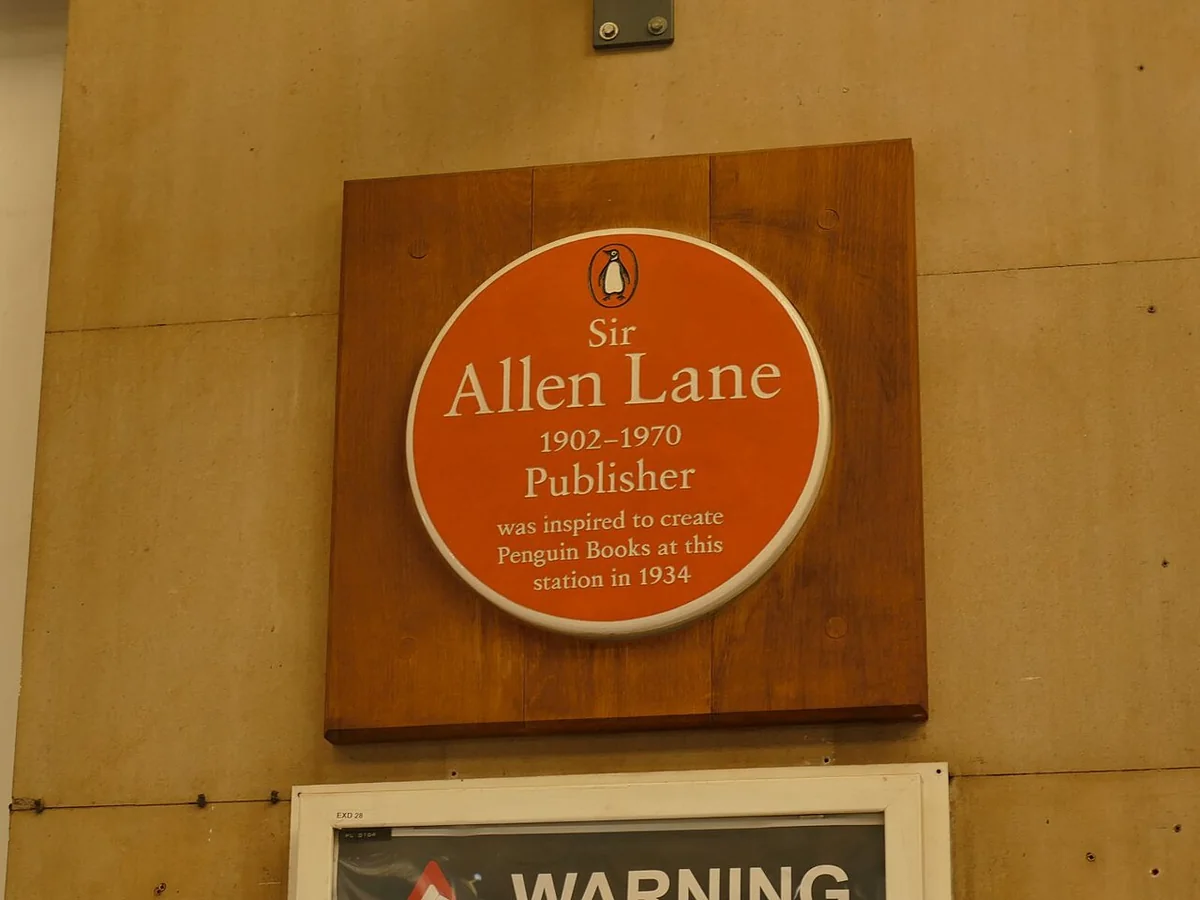

Because most early Penguins reprinted other publishers' books, the earliest Penguin copy of a title is a first Penguin printing, not a first edition of the text. Collectors still say "Penguin first edition" loosely; our guide to first edition versus first printing explains the distinction.
Start with the imprint page
Turn to the back of the title page. On an early Penguin you will find, in order:
- The original publisher and the year of first publication.
- A line such as Published in Penguin Books, with a month and year.
- Any reprints, each on its own line with its date.
The last line is the printing you hold. If the Penguin publication line is the last entry, you have a first Penguin printing. Ariel, for example, was reprinted within weeks of launch, so 1935 copies are not automatically firsts.
Printers occasionally left a reprint line out, so check the other clues below before you call a copy a first.
Read the cover colour
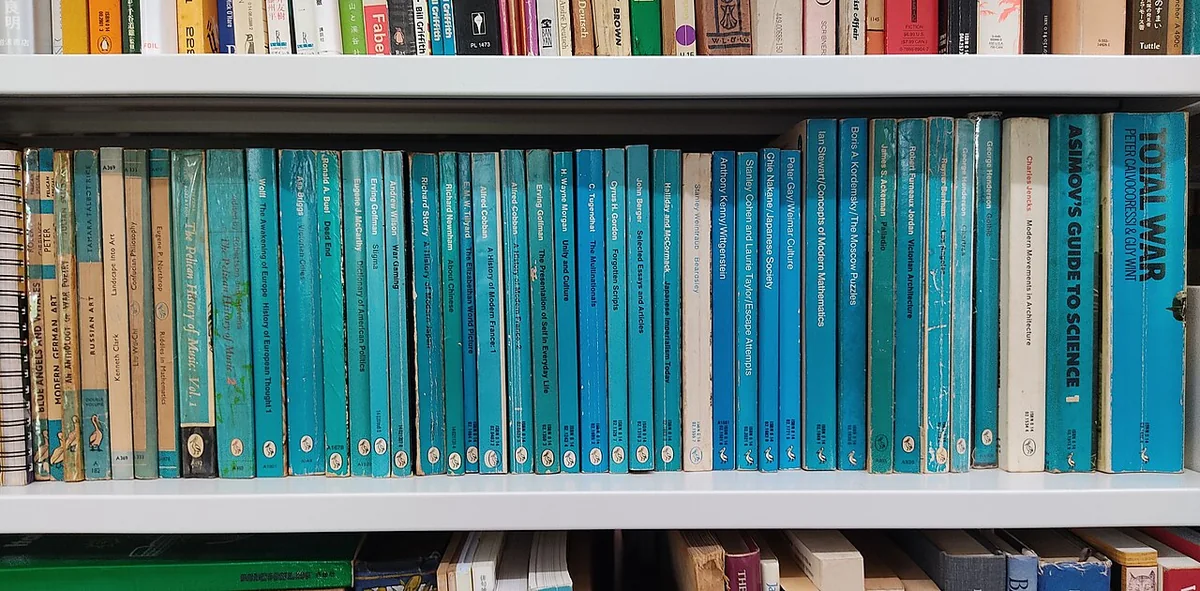
From the start, Penguin colour-coded its main series by subject, with the colour in bands above and below a white panel. The scheme makes a shelf of Penguins easy to sort and tells you what kind of book you have.


| Colour | Subject |
|---|---|
| Orange | General fiction |
| Green | Crime and mystery |
| Dark blue | Biography |
| Cerise | Travel and adventure |
| Red | Plays |
| Yellow | Miscellaneous |
| Pale blue | Pelican Books, the non-fiction imprint launched in 1937 |
The colours stayed long after the designs changed, so colour tells you the subject rather than the date. For dates, look at the layout.
Date the cover design
Penguin's covers changed in clear stages, and each layout belongs to a period.
- The Bodley Head on the cover (1935 to early 1937). Penguin began under The Bodley Head's wing, and the first 80 books carry its name on the front. From No. 81, published in March 1937, that space shows the subject instead. A Bodley Head cover is a strong sign of an early printing, though not proof on its own.
- The horizontal grid (from 1935). Edward Young, a young member of staff who also drew the penguin logo, designed the three-band cover: colour, white, colour, with the title in the central band.
- Tschichold's refinements (late 1940s). The typographer Jan Tschichold worked for Penguin from 1946 to 1949 and tidied the grid, its lettering and its rules, which is why late-1940s covers look crisper than pre-war ones.
- The Marber grid (early 1960s). Germano Facetti, art director from 1961, asked Romek Marber to redesign the green crime covers. Marber's layout set the title in a band across the top third and gave the rest of the cover to an image. The layout soon spread to other Penguin series.
A Penguin with a picture cover in the Marber layout is therefore from the 1960s or later, however old the title.
Use the price and the back cover
The price is a quick rough date.
- Sixpence (6d): the launch price. Pre-decimal prices are written in shillings and pence, such as 2/6 for two shillings and sixpence.
- Dual prices: in the run-up to decimalisation in February 1971, many Penguins carried both, such as 25p alongside 5/-.
- Decimal prices only: 1971 or later.
An ISBN on the cover or imprint page also points to about 1970 or later, since earlier Penguins were identified only by their series number. Then look at the back cover and the end pages. Early Penguins often list other titles or carry advertisements, and a list that includes books published after your copy's imprint date means the copy is a later printing.
A worked example
Say you find an orange Penguin novel at a car boot sale. Here is how the clues fit together.
- Imprint page. It reads First published 1930, then Published in Penguin Books 1938, then Reprinted 1939 and 1947. Your copy is the 1947 reprint, not the 1938 first Penguin printing.
- Cover. The three horizontal bands are there, with the subject named where The Bodley Head once appeared. That fits a book first issued in Penguin after March 1937.
- Lettering. Cleaner, more evenly spaced type than on pre-war copies is consistent with the late-1940s tidying of the design.
- Back cover. A list of recent titles includes books from 1946 and 1947 but nothing later. That agrees with the 1947 date.
When every clue points the same way, you can date the copy with confidence. When one disagrees, the imprint page usually wins, unless it is the one that looks wrong.
Common mistakes
- Taking the first date as the printing date. The first date on the imprint page is when the text was first published, often by another firm. Read to the last line.
- Assuming an old title means an old copy. Popular Penguins stayed in print for decades, so a 1930s title can be a 1970s printing.
- Trusting the wrapper. A dust wrapper tells you about the wrapper, not the book inside it.
- Confusing facsimiles with originals. Penguin has reissued its early designs for anniversaries, so a crisp copy that looks like 1935 needs the same imprint check as any other.
What makes a Penguin collectable
Penguin printed in enormous numbers, so most old Penguins are worth a few pounds. The Penguin Collectors Society notes that value is added by a first printing in very good condition with, where it applies, its dust wrapper. The copies that stand out are:
- First printings of the first ten, especially Ariel, with the Bodley Head covers.
- Copies in dust wrappers. Early Penguins were issued in printed paper wrappers, and few survive. Wrappers are easily swapped onto later printings, so check the book's own imprint page.
- Wartime and special series. Penguin specialists single out the forces editions printed for servicemen, which survive in smaller numbers than ordinary Penguins.
- Condition. Early Penguins were cheaply made, and wartime copies have thin paper and staples that rust. A bright, tight copy without spine creases is far scarcer than the title suggests.
Even sought-after early titles rarely reach more than a few hundred pounds. Specialist sellers put the range from under a pound to about £400, depending on scarcity and condition. Our condition grading guide explains how a paperback's faults are described.
Check your copy
Browse the numbered checklist of the Penguin main series and the wider Penguin and Pelican hub, or search our Penguin editions. Start with the edition pages for Ariel and The Mysterious Affair at Styles, which list the points for a July 1935 first printing. Titles are also grouped under Penguin Books and Pelican Books, and terms such as imprint page and first impression are in the glossary.
Frequently asked questions
How can I tell when my Penguin book was printed?
Look at the imprint page on the back of the title page. It gives the year the book was first published in Penguin and then lists each reprint, so the last date shown is when your copy was printed.
What was the first Penguin book?
Ariel, André Maurois's life of Shelley, was Penguin No. 1. It was one of ten titles launched on 30 July 1935 at sixpence each.
What do the colours on old Penguin covers mean?
Each colour marked a type of book: orange for fiction, green for crime, dark blue for biography, cerise for travel and adventure, red for plays and yellow for miscellaneous titles. Pelican non-fiction used pale blue.
Is my old Penguin a first edition?
Usually not in the strict sense. Most early Penguins reprinted books first published in hardback by other firms, so collectors call the earliest Penguin printing a first Penguin printing or first impression. A title published first by Penguin can be a true first edition.
Are old Penguin paperbacks worth anything?
Most sell for a few pounds, because Penguin printed them in huge numbers. First printings of early titles in fine condition, copies in their original dust wrappers and scarce wartime series are the ones that fetch more, occasionally a few hundred pounds.
Where these facts come from
- Penguin First Editions: frequently asked questions, penguinfirsteditions.com (penguinfirsteditions.com)
- Penguin Books, Design Museum (designmuseum.org)
- Classic Penguins: How Minimalist Book Covers Sold the Masses on Paperbacks, 99% Invisible (99percentinvisible.org)
- The Marber Grid: classic Penguin book cover layout, The Book Design Blog (thebookdesignblog.com)
- Remembering Romek Marber, Design Week, 2020 (designweek.co.uk)
- Are my old Penguins valuable?, The Penguin Collectors Society (penguincollectorssociety.org)
Points of issue are listed only where at least two independent sources agree. Last reviewed 17 October 2026.
Last reviewed 17 October 2026.