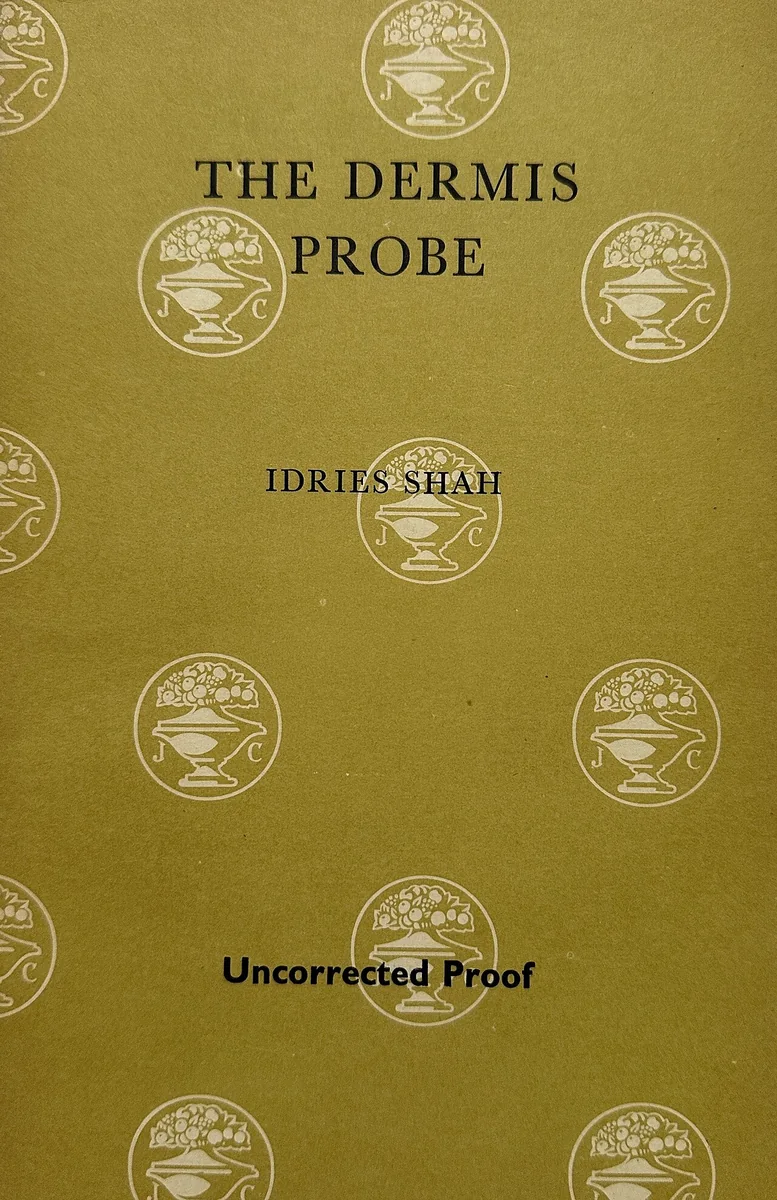
An uncorrected proof copy is a printing of a book made before publication so that reviewers, booksellers and the trade can read it early. It usually comes in plain or simply printed paper wrappers with a statement such as "Uncorrected Proof Copy" on the front. Proofs and advance reading copies (ARCs) are not first editions, but they come before them, and for the right title that makes them some of the most sought-after copies of all.
What proofs and advance copies are
Before a book is published, the publisher needs people to read it: reviewers, so that reviews appear on publication day; booksellers, so they order in quantity; and other writers, for quotations on the jacket. Proofs are how it does that. They are printed in small numbers, often a few hundred, and sent out weeks or months ahead.



The main kinds you will meet:
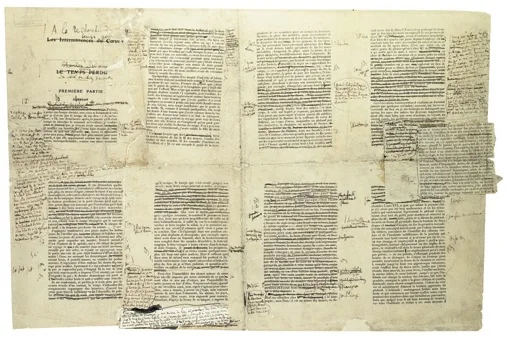
- Galley proofs: long sheets or loose pages of typeset text, used by the author and editor for corrections. Rarely seen outside archives.
- Uncorrected proofs (bound proofs): the text bound in plain or lightly printed wrappers, taken from type that has not yet had its final corrections. Often marked "Uncorrected proof" and "Not for sale".
- Advance reading copies (ARCs): often a later and glossier promotional printing, with the finished cover art, sometimes with a letter from the editor or marketing details on the back.
- Review copies: finished copies of the published book sent to reviewers, often with a printed slip giving the publication date and price. These are first editions with a slip loosely inserted, not proofs.
Publishers use these terms differently from one another, and even between imprints, so trust what is printed on the copy rather than a seller's label.
How a proof differs from the first edition
A proof was printed to be read, not sold, and it shows. Check these points:
| Feature | Uncorrected proof or ARC | First edition |
|---|---|---|
| Binding | Paper wrappers, sometimes plain | The publisher's finished binding, hardback or paperback |
| Cover | Plain, a draft design or the final art | The final jacket or cover |
| Wording | "Uncorrected proof", "Advance reading copy" or "Not for sale" | The published price and barcode |
| Text | May contain errors, cuts or passages later revised | The corrected text |
| Preliminary pages | May differ: different author credit, missing dedication, provisional dates | Final title and copyright pages |
| Number printed | Usually a few hundred | The first print run, often thousands |
Because the text was not final, a proof can preserve readings that never appeared in print. Collectors and scholars compare proofs with the published text to see how a book changed in its last weeks. That makes the points of issue of a proof different from those of the first edition: you are checking it against itself, not against later printings.
A review copy, by contrast, is the first edition. If you have a published hardback with a review slip, use our guide to identifying a first edition and check the number line as usual; the slip is a pleasant extra that some collectors pay a little more for.
When proofs become collectable
Most proofs are worth very little. Publishers send out proofs for every book they hope will sell, and most books never become collectable. A proof follows the fortunes of its title: if the book becomes a classic, the few hundred proofs printed before anyone knew become scarce, early and textually interesting all at once.
The proofs collectors chase tend to share some features:
- A debut or early book by an author who became important, when the publisher printed few proofs because nobody yet knew.
- Textual or design differences from the published book that make the proof a distinct object.
- Scarcity, with fewer proofs printed than first editions, and many thrown away by reviewers.
- Condition, since paper wrappers crease, fade and tear easily.
Print runs matter too. The bookseller Ken Lopez, who has handled proofs for decades, notes that plain proofs were typically printed in runs of around 200, while glossier promotional copies could run to 500 or more. A plain early proof is therefore usually scarcer than a later illustrated ARC of the same book, and collectors tend to prefer it.
Condition is judged on the same scale as any other book, but expectations are lower: a proof was a working copy, passed between readers and rarely looked after. A clean, unmarked proof with bright wrappers is the exception, and it is priced as one. Reviewers' notes inside can add interest if the reviewer is known, but anonymous scribbles count as faults.
The most famous British example is the proof of Harry Potter and the Philosopher's Stone. Bloomsbury has suggested about 200 copies were printed in 1997 for reviewers and booksellers. They are bound in plain wrappers and credit the author on the title page as "J.A. Rowling", an error corrected before publication; the copyright page reads "Joanne Rowling". Recorded sales show how prices vary with the details:
- Bonhams, 1 December 2021: a proof with the separate proof sheet of the early cover design sold for £35,250 including premium.
- Bonhams, 14 November 2023: a proof with some foxing sold for £14,080 including premium.
- Bonhams, 2024: a proof signed and inscribed by J.K. Rowling to an early supporter sold for £35,840, and her matching proof of Prisoner of Azkaban, one of 50 reported, made £23,040.
Compare those with the 1997 Bloomsbury hardback first edition and you see why proofs are now collected as a category of their own. Our Harry Potter hub covers the published editions.
How to identify a proof or ARC
Work through the copy from the outside in:
- Front wrapper: look for "Uncorrected proof", "Proof copy", "Advance reading copy" or "Not for sale".
- Back wrapper: ARCs often carry a publication date, price, print run or marketing plan. Proofs may be blank.
- Title and copyright pages: note any differences from the published book, such as a variant author credit, provisional dates or a missing dedication.
- Text: if you know the published book, spot-check passages known to have changed.
- Inserts: a publisher's letter or review slip is part of the copy's story; keep it with the book.
A valuable proof is worth faking, and plain wrappers are easy to imitate, so compare a copy with a described example before paying a serious price. Buy significant proofs from dealers who describe them precisely and guarantee what they sell.
Can you sell a proof marked "Not for sale"?
Many proofs and ARCs carry "Not for sale" on the cover. That wording records the publisher's intention that the copy is promotional, and some reviewers and booksellers receive copies under terms that ask them not to resell.
In practice, proofs of collectable books are openly sold by established rare book dealers and by major auction houses, including Bonhams and Sotheby's in London. In the United States, an appeals court ruled in 2011, in UMG Recordings v. Augusto, that promotional music CDs labelled for promotional use and sent out unsolicited had been transferred to the recipients, who could therefore resell them. That case concerned music, not books, and is not UK law.
The general position is that the answer can depend on how the copy was supplied and on the law where you are. If you received proofs directly from a publisher under an agreement, check its terms before selling. This guide is general information, not legal advice.
Check your copy
Find the published book on Browse, then compare your copy's wrappers, title page and copyright page with the first edition listed there. If you think you have an early proof of a collectable title, keep it flat, out of the light and in a protective sleeve, and record any inserts with it before you look at selling. Our guide to signed and inscribed books covers proofs that the author has also written in.
Frequently asked questions
Is an uncorrected proof a first edition?
No. A proof is printed before the first edition, for reviewers and booksellers, and is not the published book. Collectors treat it as a separate, earlier item that sits alongside the first edition rather than replacing it.
What is the difference between a proof and an advance reading copy?
The terms overlap and publishers use them loosely. A proof is usually plain, set from text that has not had its final corrections, while an advance reading copy (ARC) is often a later, more polished promotional printing with the finished cover. Go by what is printed on the copy itself.
Are proof copies valuable?
Most are worth little, because publishers print hundreds of proofs for books that never become collectable. A proof becomes valuable when the book does: early proofs of major titles, especially debuts, can sell for more than the first edition.
Can I sell a proof marked not for sale?
Proofs are openly bought and sold by established rare book dealers and major auction houses, and courts in some countries have treated promotional copies given away freely as the recipient's property. If you received the copy under an agreement with the publisher, that agreement may restrict resale; this is general information, not legal advice.
How many proofs of Harry Potter and the Philosopher's Stone were printed?
Bloomsbury has suggested about 200 proof copies were printed in 1997. They credit the author as J.A. Rowling on the title page, a mistake corrected in the published first edition.
Where these facts come from
- Philip W. Errington, The very first appearance of Harry Potter, Sotheby's, 2019 (sothebys.com)
- Rowling (J.K.) Harry Potter and the Philosopher's Stone, uncorrected proof copy with the cover proof, lot 163, Bonhams, 2021 (bonhams.com)
- Rowling (J.K.) Harry Potter and the Philosopher's Stone, uncorrected proof, lot 74, Bonhams, 2023 (bonhams.com)
- Unique Potter proof sells for thousands, The Edinburgh Reporter, 2024 (theedinburghreporter.co.uk)
- Ken Lopez, Why collect proofs?, Ken Lopez Bookseller, 1992 (lopezbooks.com)
- Collecting ARCs: sometimes even better than the real thing, Reactor (reactormag.com)
- UMG Recordings, Inc. v. Augusto, Wikipedia (en.wikipedia.org)
Points of issue are listed only where at least two independent sources agree. Last reviewed 17 October 2026.
Last reviewed 17 October 2026.