A Jane Austen first edition is a set of small volumes published in London between 1811 and 1818, with no author's name on the title page, and it is one of the most valuable things a nineteenth-century novel can be. It is also one of the most asked-about books we see, because the Victorian reprints that fill second-hand shops carry early dates and old bindings, and because the question "is my Pride and Prejudice a first edition?" has an answer most people do not want to hear. This guide gives the answer, book by book, and shows what a real first looks like.
We track the first editions on the book pages for Sense and Sensibility, Pride and Prejudice, Mansfield Park, Emma, Northanger Abbey and Persuasion.
The quick test
Three questions settle most cases in a minute.
- Is it one volume? Every first edition is a set: three volumes for the four novels published in Austen's lifetime, four volumes for Northanger Abbey and Persuasion together. A single volume is a later edition, whatever its date.
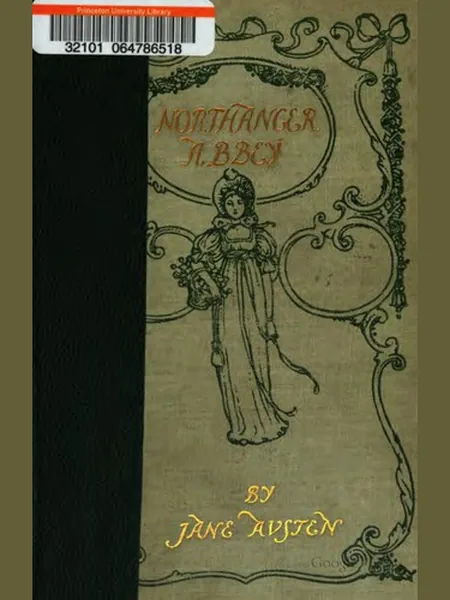
- Is her name on the title page? The first editions are anonymous. Sense and Sensibility is "By a Lady"; the rest are "By the Author of" an earlier novel. A title page reading "By Jane Austen" is a later edition. The first editions to carry her name were Richard Bentley's one-volume reprints of 1833, which are the "old" Austens most often mistaken for firsts.
- Who printed it, and when? The publisher's line should read T. Egerton, Whitehall (1811 to 1814) or John Murray, Albemarle Street (1816 and 1818), with the date in roman or arabic numerals. Any other publisher means a later edition.
If a set passes all three, read on, because the second editions of the Egerton titles also pass them, and the difference is on the title page.
The six novels
| Novel | First edition | Volumes | Title page | Reported print run |
|---|---|---|---|---|
| Sense and Sensibility | T. Egerton, 1811 | 3 | "By a Lady" | About 500 to 750 (Jane Austen's House) |
| Pride and Prejudice | T. Egerton, 1813 | 3 | "By the Author of Sense and Sensibility" | About 1,500 (Swann) |
| Mansfield Park | T. Egerton, 1814 | 3 | "By the Author of Sense and Sensibility and Pride and Prejudice" | Perhaps 1,250 (Swann) |
| Emma | John Murray, dated 1816, issued 23 December 1815 | 3 | "By the Author of Pride and Prejudice" | Not confirmed by two sources |
| Northanger Abbey and Persuasion | John Murray, dated 1818, issued December 1817 | 4 | "By the Author of Pride and Prejudice, Mansfield Park, &c.", with the Biographical Notice | Not confirmed by two sources |
Sense and Sensibility, 1811
Austen paid for the printing herself: the imprint reads "Printed for the Author, by C. Roworth" and "published by T. Egerton", which is why our catalogue records the edition under that long imprint. It appeared at the end of October 1811 in three volumes, and Jane Austen's House, which holds a copy, describes the original binding as faded blue boards with white paper spines, without labels but stamped with the volume numbers. The house also gives the print run as roughly 500 to 750 copies, revising the older figure of 1,000 downwards. A second edition followed from Egerton in 1813, so a set dated 1813 is not the first.
Sotheby's catalogued a first edition in 2025 and noted that its half-titles were lacking, which tells you what to check: a complete first has a half-title leaf before the title page of each volume, and sets rebound in the nineteenth century often lost them. Jonkers Rare Books and Temple Rare Books both describe complete sets by those half-titles and by the original boards, and sets in boards have been offered at prices above $200,000.
Pride and Prejudice, 1813
Egerton bought the copyright outright in 1812 for £110, after Cadell had turned the book down unread years earlier, and published it in January 1813 in an edition Swann Galleries puts at about 1,500 copies. The first edition's title page reads "By the Author of Sense and Sensibility". Egerton printed a second edition in the same year, and its title page says "Second Edition" below the title, so a three-volume 1813 set is only a first if that line is absent. A first edition sold at Swann in February 2020 for $100,000.
Mansfield Park, 1814
The third novel came from Egerton in May 1814 in three volumes, "By the Author of Sense and Sensibility and Pride and Prejudice", in a run Swann estimates at 1,250 copies. It sold out within six months, and the second edition, with corrections, came from John Murray in 1816, which is why a Murray Mansfield Park is not a first. Swann's February 2020 copy made $20,000, the lowest of the lifetime novels, largely because of its condition.
Emma, 1816
Austen moved to John Murray, Byron's publisher, for Emma, which was dedicated by permission to the Prince Regent. Murray published it on 23 December 1815 with the title page dated 1816, in three volumes, "By the Author of Pride and Prejudice". The title-page date is correct for a first edition and not a sign of a later printing. The copy at Swann in February 2020 made $27,500. We have not found two independent sources for the size of the edition, so we give none.
Northanger Abbey and Persuasion, 1818
The two remaining novels were published together by Murray in four volumes, dated 1818 and issued in December 1817, five months after Austen's death. The set opens with the Biographical Notice of the Author by her brother Henry, the first time her name appeared in print with her books, and the British Library's account of her names and notability describes how little the public knew of her before it. Swann's set made $11,875 in February 2020. Persuasion has no separate first edition: a Persuasion on its own is a later reprint, and our Persuasion page lists the first separate editions.
What a first edition looks like
The physical book is as telling as the title page. Austen's first editions are duodecimos, small enough to hold in one hand, printed on untrimmed paper with wide margins, and issued in the plain paper-covered boards that publishers used before cloth binding came in. Peter Harrington's survey of the six novels describes the boards and the paper labels, and notes that buyers normally had the sheets rebound in calf or half-calf to match their shelves. That is why most surviving sets are in nineteenth-century leather, and why a set in the original boards, with the labels and the untrimmed edges, is the prize: it is the book as it was sold.
A rebound set is still a first edition. What matters for the price, in order, is completeness (every volume, every half-title, the advertisement leaves where called for), the state of the paper (foxing and browning are common), and the binding. David Gilson's A Bibliography of Jane Austen (1982) is the standard reference the dealers cite, and it collates each edition leaf by leaf; if you are buying at a high price, ask for the Gilson number and a collation.
The reprints that look like firsts
The editions that most often arrive hoping to be firsts are these, and none is:
- Bentley's Standard Novels, 1833 onwards. One volume per novel, Austen's name on the title page, an engraved frontispiece. The first editions to name her, and collected in their own right, but not firsts.
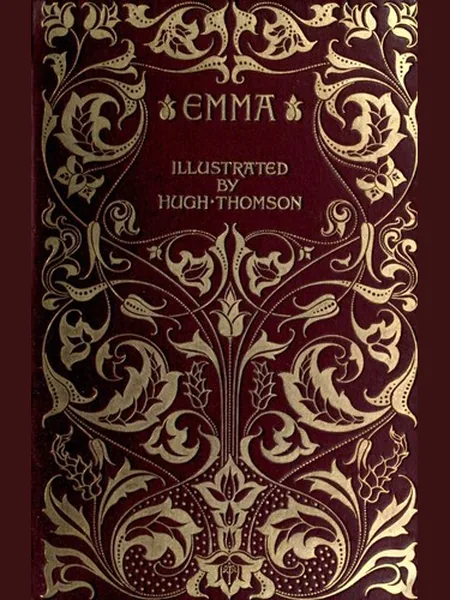
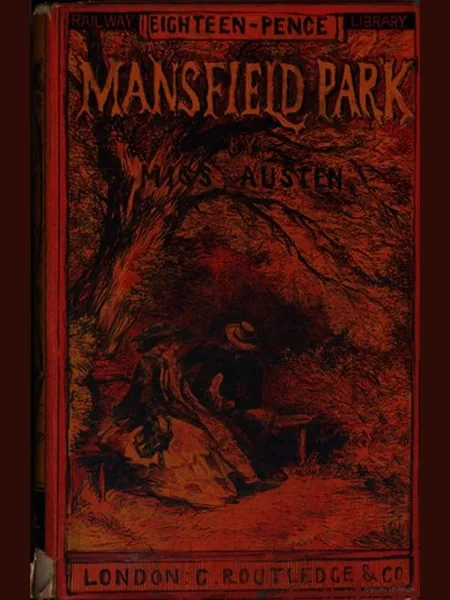
- Later nineteenth-century sets from Routledge, Chapman and Hall, Macmillan and Dent, often in handsome cloth or leather, sometimes with illustrations by Hugh Thomson or the Brocks. Pretty, common, and worth tens of pounds rather than thousands.
- Facsimiles and "first edition" reprints made for anniversaries, which copy the original title pages. These are modern books with modern paper and a modern imprint somewhere inside.
Our guide to first edition versus first printing explains the words, and points of issue explains how dealers tell printings apart.
What they have sold for
Results from one sale, Swann Galleries in New York on 20 February 2020, which offered all six novels on the same day and so gives the cleanest comparison. They are reported prices, not valuations, and sets in original boards sell for multiples of these.
| First edition | Price |
|---|---|
| Pride and Prejudice, 1813 | $100,000 |
| Sense and Sensibility, 1811 | $81,250 |
| Emma, 1816 | $27,500 |
| Mansfield Park, 1814 | $20,000 |
| Northanger Abbey and Persuasion, 1818 | $11,875 |
If you believe you have a set, do not clean, rebind or repair it. Grade it as it is, photograph the title pages and spines, and talk to a specialist dealer or auction house; our guide to where to sell rare books lists the options.
Frequently asked questions
How do I know if my Pride and Prejudice is a first edition?
A first edition is three separate small volumes, printed for T. Egerton of Whitehall and dated 1813, with no author's name: the title page reads "By the Author of Sense and Sensibility". The same year Egerton printed a second edition whose title page says "Second Edition". A single volume, or any copy naming Jane Austen on the title page, is a later edition. The first collected editions with her name came from Richard Bentley in 1833.
How many copies of Jane Austen's first editions were printed?
Small numbers. Jane Austen's House puts Sense and Sensibility at roughly 500 to 750 copies, revised down from an older estimate of 1,000; Swann Galleries gives about 1,500 for Pride and Prejudice and perhaps 1,250 for Mansfield Park. No contemporary print record survives for every title, so treat the figures as estimates.
Why do Jane Austen first editions not have her name on them?
She published anonymously, as many women novelists did. Sense and Sensibility is "By a Lady", and each later novel is "By the Author of" the previous ones. Her name first appeared in print in the Biographical Notice her brother Henry wrote for Northanger Abbey and Persuasion, published after her death.
What are Jane Austen first editions worth?
Five and six figures. At Swann Galleries in February 2020 a first edition of Pride and Prejudice made $100,000, Sense and Sensibility $81,250, Emma $27,500, Mansfield Park $20,000 and Northanger Abbey and Persuasion $11,875. Sets in the original boards sell for much more than rebound sets, and dealers have asked well over $200,000 for Sense and Sensibility in boards. Past results are not a valuation of a particular set.
What does a Jane Austen first edition look like?
Three or four small volumes, duodecimo, in plain paper-covered boards, usually blue or drab, with paper spine labels or just the volume number, and untrimmed edges. Most sets were rebound in leather by their first owners, so a set in original boards is the exception. The text is in a plain early nineteenth-century type with half-titles before each volume's title page.
Is Emma dated 1815 or 1816?
The title page says 1816, but John Murray published it on 23 December 1815. That is normal for a book issued at the year's end, and a title page dated 1816 is correct for the first edition. The same happened with Northanger Abbey and Persuasion, dated 1818 and issued in December 1817.
Where these facts come from
- First edition: Sense and Sensibility, Jane Austen's House (janeaustens.house)
- Sense and Sensibility, Wikipedia (en.wikipedia.org)
- First edition of Sense and Sensibility, Sotheby's, 2025 (sothebys.com)
- Sense and Sensibility, first edition, Jonkers Rare Books (jonkers.co.uk)
- A Novel, By a Lady: Jane Austen first editions, Swann Galleries, February 2020 (swanngalleries.com)
- By a Lady: first editions of the novels of Jane Austen, Peter Harrington (peterharrington.co.uk)
- Jane Austen: names and notability, British Library (bl.uk)
- Emma (novel), Wikipedia (en.wikipedia.org)
- Jane Austen, full bibliography of books, Pemberley (pemberley.com)
- The novels, first editions, Temple Rare Books (templerarebooks.com)
- Jane Austen first editions, Biblio (biblio.com)
- A Bibliography of Jane Austen, David Gilson, Oxford University Press, 1982 (the standard reference, cited by the dealers above)
Points of issue are listed only where at least two independent sources agree. Last reviewed 25 October 2026. Reviewed by Harriet Ellis; read how we check facts.