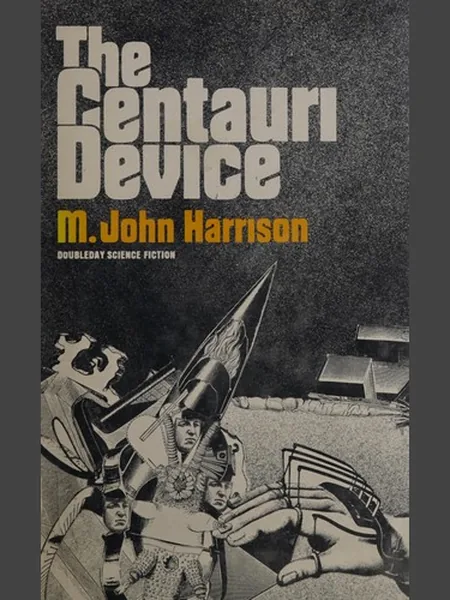
Doubleday is a New York publisher founded in 1897 by Frank Nelson Doubleday and S. S. McClure; it published Stephen King's early novels, beginning with Carrie, and is now part of Knopf Doubleday at Penguin Random House.
Doubleday is a publisher based in New York City, founded in 1897. We track 823 editions it published between 1900 and 2025, 576 of them first editions across 812 books. How Doubleday marked its first editions is set out below, with a checker for the year on your title page.
About Doubleday
Doubleday is an American publisher founded in 1897 by Frank Nelson Doubleday and the magazine publisher S. S. McClure, and it is now a New York-based imprint of the Knopf Doubleday Publishing Group within Penguin Random House.
The firm began as Doubleday & McClure, and one of its first bestsellers was Rudyard Kipling's story collection The Day's Work. The McClure partnership ended in 1900, when Doubleday joined Walter Hines Page to form Doubleday, Page & Company, which moved its operations to Garden City, New York, in 1910. A merger with the George H. Doran Company in 1927 produced Doubleday, Doran, and the name changed to Doubleday & Company in 1946. Under Douglas Black, president from 1946 to 1963, the company started the Anchor Books quality paperback line and set up mail-order book clubs.
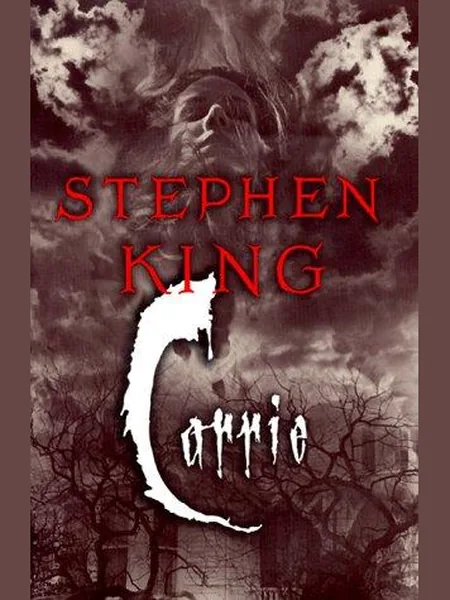
Isaac Asimov and Ray Bradbury published with the house, and Stephen King's early novels, Carrie (1974), 'Salem's Lot (1975), The Shining (1977) and The Stand (1978), appeared under its imprint. Its Crime Club issued Sax Rohmer's Fu Manchu books and Leslie Charteris's Saint series.
Nelson Doubleday Jr. sold the publishing company to Bertelsmann in 1986. Parts of it joined Bantam Doubleday Dell in 1988, which became part of Random House in 1998, and in 2009 Doubleday merged with the Knopf Publishing Group to form Knopf Doubleday.
Holding a copy? The first edition checker shows Doubleday's practice for the year on your title page.
Identification
How to identify Doubleday first editions
British practice
Doubleday's British list is an imprint of Transworld Publishers in London, and its books are identified the British way: a first impression is shown by a complete number line on the copyright page.
A Doubleday UK first impression has a number line that still includes the 1, usually set as 1 3 5 7 9 10 8 6 4 2, although other orders such as 2 4 6 8 10 9 7 5 3 1 also occur.
A later impression keeps the line but loses the lowest figure, so a second impression reads 3 5 7 9 10 8 6 4 2.
The same convention runs across Doubleday's children's books, which from the 2000s appeared from Random House Children's Books (later Random House Children's Publishers) in London.
The publisher line names Transworld Publishers, London, which tells a London copy apart from the New York Doubleday edition of the same title.
Example
Monica Ali's Brick Lane (Doubleday, London, 2003): a first impression has the complete line 1 3 5 7 9 10 8 6 4 2.
US first editions
From the 1920s Doubleday printed "First Edition" on the copyright page of a first printing and left it off every later printing, so an American Doubleday book without the statement is not a first printing.
The copyright page
Doubleday, Page (by the late 1920s at the latest), Doubleday, Doran (formed by the merger with George H. Doran at the end of 1927) and Doubleday & Co. first printings carry the words "First Edition" on the copyright page, with the copyright notice on the back of the title page. By 1937 the firm said it had done this for many years.
Later printings carry no printing statement at all: the "First Edition" line is simply dropped, so its absence is the sign of a reprint.
Where a Doubleday book also has a number line, the lowest figure is the printing whatever order the figures run in, so a first printing shows both the statement and a 1.
Gutter codes
Doubleday books of the 1970s and 1980s, Stephen King's early novels among them, often carry a short printed code, a letter followed by a number, low in the gutter of a page at or near the end of the text. For some titles a specific code marks the first printing, so check it against a bibliography of the title.
Sometimes the code is the main point: the first printing of Again, Dangerous Visions (1972), the anthology edited by Harlan Ellison, is identified by the code N7 in the gutter of page 760.
Traps
Book club copies are the main trap. Doubleday ran its own clubs, among them the Literary Guild, the Doubleday Book Club, the Mystery Guild and the Science Fiction Book Club. Club copies are usually smaller and lighter than the trade edition, on thinner paper, and their jackets have no price on the front flap, so a priced trade jacket is a key check.
Older Doubleday club jackets say "Book Club Edition" at the foot of the front flap; later ones instead carry a five-digit code, often black figures in a white box, on the back panel. Club jackets also often lack the barcode of the trade jacket.
A book club copy can still print "First Edition" on the copyright page, because the clubs often printed from the trade plates without removing it, so the statement alone does not prove a trade first.
Book club printings can carry gutter codes too, so a code alone does not prove a trade copy.
Examples
The first printing of Stephen King's Carrie (1974) says "First Edition" on the copyright page, has the code P6 in the gutter of page 199, and comes in a jacket priced $5.95 on the front flap.
Doubleday's British list is an imprint of Transworld Publishers in London, and its books are identified the British way: a first impression is shown by a complete number line on the copyright page. - A Doubleday UK first impression has a number line that still includes the 1, usually set as 1 3 5 7 9 10 8 6 4 2, although other orders such as 2 4 6 8 10 9 7 5 3 1 also occur. - A later impression ke
How many Doubleday books does MyVolumes track?
We track 823 editions published by Doubleday, 576 of them first editions, across 812 books.
Doubleday London first impressions quoting the number line 1 3 5 7 9 10 8 6 4 2 (Christopher Morrow, Booklover Oxford, Ann's Old Town Books), AbeBooks search results, 2026 (abebooks.co.uk)
Doubleday and Transworld first and later impressions (The Print Room, Orlando Booksellers, Dan Pope Books, Saucony Book Shop, The Book Bin), AbeBooks search results, 2026 (abebooks.co.uk)
Books published by Doubleday UK, London (Crystal Palace Antiques), AbeBooks, 2026 (abebooks.com)
Philip Pullman, The Scarecrow and His Servant (Doubleday, Random House Children's Books, 2004), Orlando Booksellers, AbeBooks search results, 2026 (abebooks.co.uk)
First-Edition: Identification by Publisher (Allen and Patricia Ahearn), ILAB, 2010 (ilab.org)
First Editions of Today and How to Tell Them (3rd edn), H. S. Boutell, Internet Archive, 1949 (archive.org)
Identifying First Editions, A Primer: The Publishers, Independent Online Booksellers Association (ioba.org)
Identifying first editions (updated 2024), Bev Vincent, StephenKing.com, 2024 (stephenking.com)
How To Identify Book Club Editions (part 2), BookThink, 2008 (bookthink.com)
Book Club Edition Identification, TomFolio (tomfolio.com)
Carrie (Doubleday, 1974) first edition listings, Raptis Rare Books, Whitmore Rare Books and Dunaway Books, AbeBooks, 2026 (abebooks.co.uk)
Again, Dangerous Visions (Doubleday, 1972) first printing listings, John W. Knott Jr, Fahrenheit's Books and The Fine Books Company, AbeBooks, 2026 (abebooks.co.uk)
Every fact on this page was checked against the sources listed. Checked 20 October 2026. Reviewed by Harriet Ellis; read how we check facts.
We use Google Analytics cookies to count visits and see which pages help collectors. You can opt out at any time. Privacy