- Before about 1933 Knopf put no first edition statement on first printings; reprints were marked on the copyright page ("Second Printing", "Third Printing" and so on), so a copy with no printing note is the first.
- A note reading "First and second printings before publication" means the copy belongs to the second printing, not the first.
- From about 1933 or 1934 Knopf first printings state "First Edition" on the copyright page, or "First American Edition" when the book had already appeared abroad.
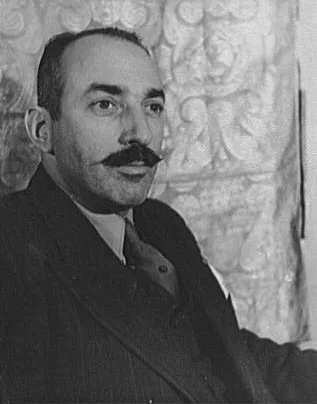
Publisher · founded 1915 · New York City
Knopf
Knopf is a New York literary publisher founded in 1915 by Alfred and Blanche Knopf, known for its borzoi colophon, Willa Cather and The Prophet, and now part of Penguin Random House.
- Editions tracked
- 638
- First editions
- 335
- Books
- 634
- Years
- 1916 to 2026
About Knopf
Alfred A. Knopf, usually called Knopf, is an American literary publisher founded in New York City in 1915 by Alfred A. Knopf and Blanche Knopf (then his fiancee, later his wife), and it is now an imprint of the Knopf Doubleday Publishing Group within Penguin Random House.
Alfred started with a one-room office and just under five thousand dollars, much of it advanced by his father Samuel, and the business was incorporated in 1918. Blanche, vice-president from 1921 and president from 1957, built its links with European and South American writers and is credited with the firm's borzoi dog colophon. From 1923 Knopf also published H. L. Mencken and George Jean Nathan's magazine The American Mercury.
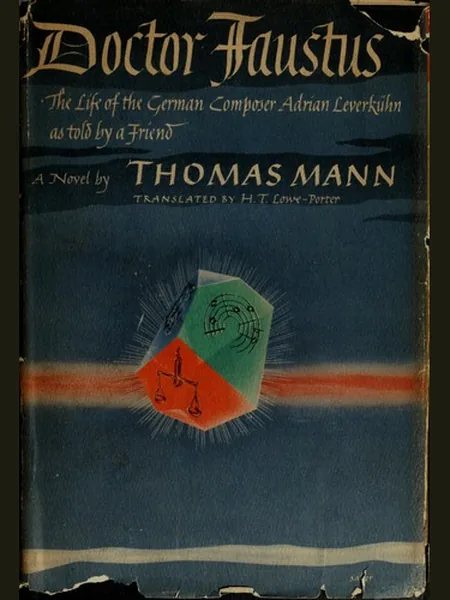
Willa Cather published sixteen books with Knopf, Kahlil Gibran's The Prophet (1923) became one of its most successful titles, and its list included Thomas Mann, Langston Hughes, Albert Camus, Jean-Paul Sartre and John Updike. Editor Judith Jones later acquired Mastering the Art of French Cooking.
The Knopfs sold the firm to Random House in 1960, and Knopf kept its editorial independence as an imprint. It was combined with Doubleday in 2009 to form Knopf Doubleday, which became part of Penguin Random House when that group was formed in 2013.
Identification
How to identify Knopf first editions
Since 1933 or 1934 Knopf has printed "First Edition", or "First American Edition", on the copyright page of a first printing, and before that it marked only its reprints, so a Knopf first printing either carries the statement or, before 1934, has no printing note at all.
Before 1934
- From the founding in 1915 Knopf put no first edition statement on first printings. Reprints were marked on the copyright page ("Second Printing", "Third Printing" and so on), so a copy with no printing note is the first.
From 1933 or 1934
- First printings state "First Edition" on the copyright page, or "First American Edition" when the book had already appeared abroad (in 1937 the firm said: where the English edition came first or at the same time). The firm restated this practice in 1947.
- Later printings continue to be noted on the copyright page.
Traps
- "First and second printings before publication". This note means the copy belongs to the second printing, run off before publication because advance orders were strong.
- "First American Edition". It marks the first printing of the American edition, used when the British or another foreign edition came first or at the same time. The foreign edition may be the true first.
- Book club copies. Book-of-the-Month Club copies are usually the same size and quality as the trade edition, so size is no guide. Look for a jacket with no price on the front flap and a small blind stamp (a dot, circle or square) low on the rear board; BOMC printed prices on some jackets in the 1970s, but those copies still carry the stamp. A copyright page that says "First Edition" does not rule out a club copy.
Example
- A Knopf title of the 1920s with no printing note on the copyright page beyond the copyright notice is a first printing; a copy of the same book reading "First and second printings before publication" is the second printing.
Authors
Books
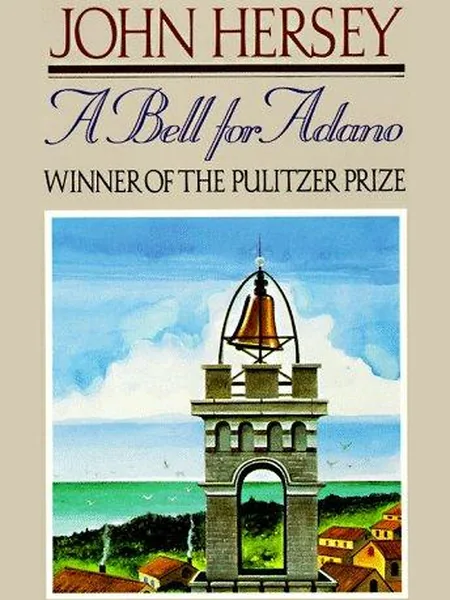
Published by Knopf













Frequently asked questions
How do I identify a Knopf first edition?
- Before about 1933 Knopf put no first edition statement on first printings; reprints were marked on the copyright page ("Second Printing", "Third Printing" and so on), so a copy with no printing note is the first. - A note reading "First and second printings before publication" means the copy belongs to the second printing, not the first. - From about 1933 or 1934 Knopf first printings state "Fir
How many Knopf books does MyVolumes track?
We track 638 editions published by Knopf, 335 of them first editions, across 634 books.
Where these facts come from
- Alfred A. Knopf, Wikipedia (en.wikipedia.org)
- First Editions of Today and How to Tell Them (3rd edn), H. S. Boutell, Internet Archive, 1949 (archive.org)
- First-Edition: Identification by Publisher (Allen and Patricia Ahearn), ILAB, 2010 (ilab.org)
- How to Identify First Editions from Alfred A. Knopf, Books Tell You Why, 2013 (blog.bookstellyouwhy.com)
- Identifying First Editions, A Primer: The Publishers, Independent Online Booksellers Association (ioba.org)
- Identifying Book Club Editions, Independent Online Booksellers Association (ioba.org)
- Book Club Edition Identification, TomFolio (tomfolio.com)
- How To Identify Book Club Editions (part 2), BookThink, 2008 (bookthink.com)
Every fact on this page was checked against the sources listed. Checked 20 October 2026. Reviewed by Harriet Ellis; read how we check facts.